
Quick Answer
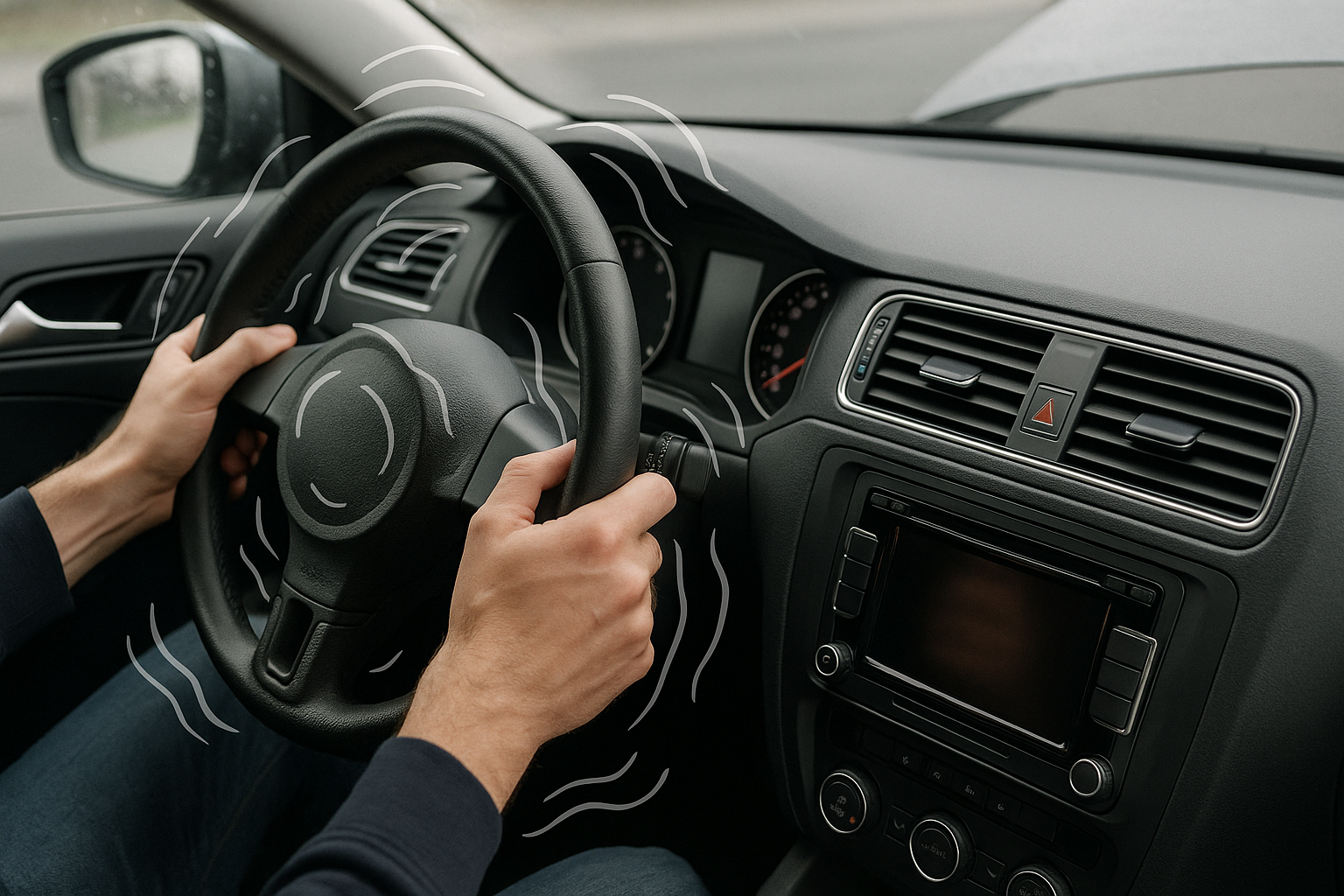
The most common reasons a car shakes while driving are wheel and tire issues (imbalance, bent rims, out-of-round tires), brake problems that show up when you stop (rotor thickness variation, stuck caliper), and worn suspension or steering parts (tie rods, ball joints, wheel bearings). Less common but important causes include engine misfires, failing motor mounts, CV axles, and driveshaft or U-joint problems. The timing of the shake—at certain speeds, under braking, during acceleration, or at idle—usually points to the culprit.
How to Read the Clues: When and How the Shake Happens
Before replacing parts, note exactly when the vibration occurs. The pattern is your best shortcut to the right fix.
- Only at specific speeds (often 50–75 mph), steady throttle: Most often wheel/tire imbalance, bent rims, or a driveshaft balance issue.
- Only while braking: Suspect rotor thickness variation, uneven pad deposits, or a sticking caliper.
- Under hard acceleration: Consider inner CV joints, worn engine/transmission mounts, or driveshaft U-joints.
- When turning: Outer CV joints (clicking), wheel bearings (growl/hum that changes with load), or a bent wheel.
- At idle or low speed, even in neutral: Engine misfire, vacuum leak, or deteriorated mounts.
- Where you feel it: A shaking steering wheel points to front-end or front tire issues; a buzz through the seat or floor often points rearward or to the driveline.
Common Causes by System
Wheels and Tires
Wheel and tire problems are the top cause of highway-speed vibration. Even a few grams of imbalance can create a rhythmic shake you feel through the steering wheel or seat. Potholes, curb strikes, bent wheels, and normal wear all contribute.
- Imbalance: Missing wheel weights or uneven tire mass. The vibration usually peaks in a narrow speed band (e.g., 60–70 mph) and fades above or below it.
- Bent or cracked wheel: Often hard to spot by eye; shows as excessive runout on a balancer.
- Out-of-round tire or separated belt: The tire looks fine but has a high spot or internal defect that causes a thump growing with speed.
- Uneven or cupped tread wear: Frequently from worn shocks/struts or poor alignment; adds a droning noise plus vibration.
- Improper lug nut torque or missing hub-centric rings (aftermarket wheels): Off-center mounting causes off-axis rotation and shake.
- Mud/snow or packed debris inside the wheel: Temporary imbalance until cleaned out.
- Flat-spotting after sitting: Brief vibration for the first miles on cold mornings that fades as the tires warm.
Tell-tale signs include a shake that’s strongest at highway speed and improves if you slightly speed up or slow down, and a steering wheel that wobbles more than the body. If tires were just mounted or rotated and the vibration started immediately, rebalancing or proper centering is the likely fix.
Fixes: Precision wheel balancing—ideally road-force balancing with match-mounting—often solves it. Replace bent wheels or defective tires. Verify proper lug torque and use hub-centric rings when required. Correct uneven wear by checking shocks/struts and alignment.
Typical cost: $60–$120 for balancing all four wheels; $120–$200 for road-force balancing. Replacement wheels and tires vary widely. An alignment runs $100–$200; shocks/struts are $400–$1,200+ depending on vehicle.
Brakes
If shaking appears only when you step on the brake, the braking system is the likely source. Despite the common phrase “warped rotors,” most brake pulsation comes from rotor thickness variation (RTV) and uneven pad material transfer. Heat spots, rust scale, and seized caliper slide pins contribute.
- Rotor thickness variation/pad deposits: Produces a pulsating pedal and steering wheel shake during braking, often worse at higher speeds or after long downhill stops.
- Sticking caliper or frozen slide pins: Can cause a pull to one side, hot smell, uneven pad wear, and shake during or even after braking.
- Contaminated or glazed pads: Inconsistent friction in spots gives uneven braking forces.
- Rear drums (where equipped): Out-of-round drums create pedal pulsation at low/moderate speeds.
How it feels: Smooth at steady speed, but as soon as you brake, the vibration rises with wheel speed. The steering wheel may shimmy if front rotors are the issue; a seat or pedal throb can point to the rears.
Fixes: Replace or resurface rotors and install new pads as a set, clean and lubricate caliper slides, verify piston movement, and flush old brake fluid if boiling or corrosion is suspected. Proper pad bedding helps prevent uneven deposits.
Typical cost: Front or rear pads and rotors $250–$600 per axle on most vehicles; higher for performance models. Caliper replacement adds $150–$400 per side.
Suspension and Steering Components
Play in the front end lets wheels wobble and amplifies vibrations coming from the tires. As parts wear, small imbalances feel larger, stability drops, and tire wear accelerates.
- Tie rod ends and inner tie rods: Play leads to toe changes and steering shimmy, often felt over bumps or at certain speeds.
- Ball joints and control arm bushings: Allow the wheel to move fore/aft or change camber, causing wandering, clunks, and shake.
- Wheel bearings: A growl or hum that changes when turning; excessive play can create vibration and uneven rotor behavior.
- Struts/shocks: Weak damping lets tires “hop” and develop cupping, adding sustained vibration over rough surfaces.
How it feels: Vague steering, more vibration over small bumps, and uneven tire wear such as feathering or cupping. A failing bearing may get louder when turning one direction and quieter the other.
Fixes: Replace worn joints, bushings, and bearings; then align the vehicle. New shocks/struts restore tire contact and prevent cupping.
Typical cost: Tie rods/ball joints $200–$600 per side; control arm assemblies $300–$800 each; wheel bearings $250–$600 per corner; struts/shocks $400–$1,200+ for all four.
Engine and Driveline
Vibrations that appear under load, on acceleration, or at idle trace back to the powertrain rather than the wheels.
- Engine misfire or poor tune: Shaky idle and stumble under acceleration; a flashing check-engine light signals severe misfires.
- Worn engine or transmission mounts: Excess movement transmits vibration into the cabin, often worse when shifting into gear or under throttle.
- CV axles (FWD/AWD): Inner joints cause shudder on acceleration; outer joints click when turning and may vibrate under load.
- Driveshaft imbalance or bad U-joints (RWD/4WD): Vibration rises with speed, often a buzz at a specific mph that doesn’t change with braking.
- Torque converter shudder: Feels like rumble strips around 35–55 mph when lockup engages lightly.
How it feels: If the car is smooth while coasting but shakes when you accelerate, look at CV joints, mounts, and the driveline. If it shakes sitting still, think engine tuning or mounts. A driveshaft issue usually tracks strictly with speed and won’t change with braking.
Fixes: Address misfires with coils, plugs, injectors, and diagnostics for vacuum or fuel issues. Replace worn mounts and CV axles as assemblies. Balance or replace driveshafts and U-joints; some require precise indexing. A transmission fluid exchange with the correct spec can reduce torque converter shudder.
Typical cost: Spark plugs/coils $150–$600; mounts $250–$800 each; CV axles $250–$600 each; U-joints $200–$500; driveshafts $500–$1,200; transmission service $150–$350.
Quick Checks You Can Do at Home
Simple inspections can reveal a lot before you book a shop visit.
- Look for missing wheel weights, bent rims, embedded stones, or mud/snow packed inside wheel barrels.
- Check tire pressures cold and match the door placard. Underinflation exaggerates vibration and promotes cupping.
- Inspect tread for cupping, feathering, bulges, or uneven wear. One bad tire can shake the whole car.
- Verify all lug nuts are present and torqued evenly in a star pattern. Use a torque wrench to the manufacturer spec if available.
- Spin each wheel (safely on jack stands) and watch for side-to-side or up-down wobble; listen for grinding that signals a bearing issue.
- During a test drive, note the exact speed, throttle position, and conditions when the shake starts, peaks, and fades. This detail speeds diagnostics.
- If the shake appears only after wheel installation, loosen and re-torque with the wheel centered; confirm hub-centric rings are installed for aftermarket wheels.
Diagnostic Flow: Narrow It Down Fast
Use the symptom-to-cause map below to prioritize what to check next and avoid guesswork.
| Symptom | Most likely causes | What to check next |
|---|---|---|
| Shake at 55–70 mph, steady throttle | Wheel/tire imbalance, bent rim, out-of-round tire | Road-force balance, inspect wheel runout, swap front/rear to see if steering feel changes |
| Vibration only when braking | Rotor thickness variation, pad deposits, sticking caliper | Measure rotor thickness/runout, inspect pad wear, clean/lube slides, check for hot spots |
| Shudder on acceleration, smooth on coast | Inner CV joint, worn mounts, driveshaft/U-joint | Inspect CV boots/play, power-brake test for mount movement, check U-joint play and driveshaft balance |
| Vibration changes when turning | Wheel bearing, outer CV, bent wheel | Listen for hum that changes with steering, check bearing play, examine wheel runout |
| Shakes at idle or stoplights | Engine misfire, vacuum leak, mounts | Scan for codes, check misfire counters, inspect vacuum lines, observe engine movement in gear |
| New vibration after tire service | Improper balance, off-center mounting, missing hub rings | Rebalance, verify wheel centering, torque lugs to spec |
| Wobble with a clunk over bumps | Loose tie rod/ball joint, control arm bushings | Pry-bar and shake test on joints, check alignment and tire wear patterns |
How Urgent Is It? Safety Risk by Issue
Some vibrations are annoyances; others can risk loss of control. Treat these as high priority:
- High: Loose or missing lug nuts; severe wheel/tire damage; major tie rod or ball joint play; failing wheel bearing (growl plus heat); violent shake above 40 mph. Park and repair before further driving.
- Moderate: Brake pulsation; cupped tires; worn shocks; minor rotor variation; early CV joint noise. Drive gently and schedule service soon.
- Lower: Mild flat spots after sitting; small imbalance; slight mount wear. Monitor, then correct to prevent secondary wear.
Prevention Tips That Actually Work
Most shaking issues are preventable with routine care and careful installation practices.
- Balance and rotate tires every 5,000–7,500 miles; use road-force balancing if you’re chasing a persistent shake.
- Get an alignment after suspension work, a hard curb strike, or if you see uneven wear or drifting.
- Replace worn shocks/struts on schedule to stop cupping before it starts.
- Torque lug nuts with a torque wrench in a star pattern; avoid hammering them tight with an impact gun.
- Clean wheel and hub faces during tire changes; corrosion or debris can keep wheels from seating true.
- Bed new brake pads and rotors properly to establish an even transfer layer and reduce pulsation risk.
- Use hub-centric rings with aftermarket wheels so the wheel centers on the hub, not the studs.
Cost and Time Estimates
Budgets vary by vehicle and region, but these ballpark figures help set expectations.
| Repair/Service | Typical parts + labor | Shop time |
|---|---|---|
| Wheel balance (4 tires) | $60–$120 ($120–$200 for road-force) | 30–90 minutes |
| Tire replacement (per tire) | $120–$350+ | 30–60 minutes |
| Brake pads & rotors (per axle) | $250–$600 | 1.5–3 hours |
| Front-end alignment | $100–$200 | 45–90 minutes |
| Tie rod or ball joint (per side) | $200–$600 | 1–2.5 hours |
| Wheel bearing (per corner) | $250–$600 | 1.5–3 hours |
| CV axle (each) | $250–$600 | 1–2 hours |
| Engine/trans mount (each) | $250–$800 | 1–3 hours |
| Driveshaft/U-joint service | $200–$1,200 | 1–3 hours |
When to See a Mechanic
Book a professional inspection right away if the shake is severe, worsening, or paired with strong pulls under braking, burning smells, loud humming, or any clunking in the front end. A shop with a quality balancer (ideally road-force), on-car brake measurement tools, and the ability to check suspension play will find the root cause faster and prevent throwing parts at the problem.
Frequently Asked Questions
Can a bad alignment cause vibration by itself?
A poor alignment usually causes pulling and uneven tire wear, not a direct high-speed vibration. However, the uneven wear it creates—especially feathering—can make the car shake. If you feel a shake and see irregular tread patterns, correct the alignment and rotate or replace the affected tires.
Why does my car shake only between 60 and 70 mph?
A narrow speed band points to wheel/tire imbalance or a slight out-of-round condition. Every rotating assembly has resonant speeds where small imbalances feel larger. A precise balance (road-force if necessary) and checking wheel runout typically resolves it. Also verify proper wheel centering and lug torque.
Is it safe to drive if the steering wheel shakes?
Mild vibration from a known imbalance isn’t usually immediately dangerous, but it accelerates wear on suspension, tires, and bearings. A strong or worsening shake—especially with noise or heat from a wheel—can signal a safety-critical issue. If the wheel wobbles violently, slow down and safely stop to inspect lug nuts, tire condition, and wheel integrity.
Do “warped” rotors really cause brake shake?
True rotor warping is uncommon. Most brake pulsation comes from rotor thickness variation and uneven pad material transfer. The remedy is the same: replace or properly resurface rotors, install quality pads, service caliper hardware, and bed the brakes. If calipers stick or slides are dry, the problem will return.
Can low tire pressure make my car vibrate?
Yes. Underinflation changes a tire’s shape and can exaggerate imbalance, create a squirmy feel, and promote cupping that leads to persistent vibration. Set pressures to the door placard when tires are cold. If vibration persists after correcting pressure, have the tires inspected and balanced.
Why does the vibration fade after a few miles on cold days?
That’s likely flat-spotting from the car sitting overnight. The flattened area relaxes as the tire warms, and the vibration fades. It’s common with performance tires and in cold weather. If it lasts longer than a few miles or you see irregular wear, check balance and alignment.
Could loose lug nuts cause shaking without other signs?
Loose lugs can cause a severe wobble, clunking, and rotor or hub damage. Sometimes the only early sign is a new vibration after wheel service. Stop driving, torque the lugs properly, and inspect for elongated holes or damage. If the wheel has been wobbling, have the hub and studs checked.