
Quick Answer
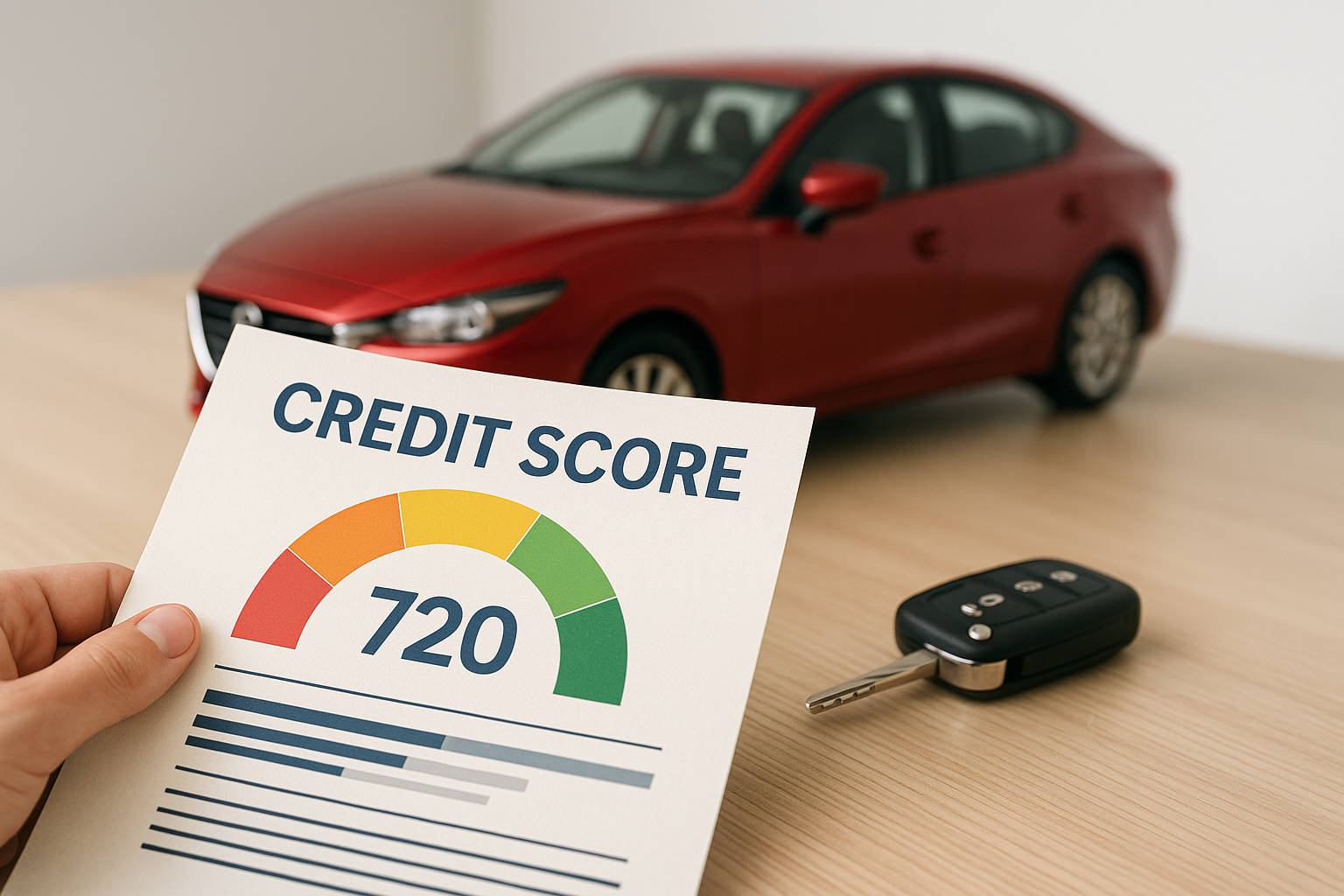
A good credit score to lease a car is typically 700 or higher, which usually qualifies you for promotional lease programs and the lowest money factors (interest). Many drivers get approved with scores in the mid-600s, but expect a higher monthly payment and possibly a larger drive-off amount. Below about 620, approvals become less common and terms are rarely attractive, though a co-signer or extra security deposits can help.
What lenders mean by “good credit” for a car lease
Automakers’ captive finance companies and banks price leases by tiering applicants into credit buckets. While each lender sets its own cutoffs, “good credit” for leasing generally means “prime” or better, where you’ll see minimal interest (money factor), access to special programs, and lower upfront costs. Leasing is risk-sensitive: the lender owns the car throughout the term, so they prefer applicants with a consistent credit history, low revolving utilization, manageable debt-to-income, and stable income—not just a decent score.
The score you see in a consumer app may not match what a dealer pulls. Many lessors use a FICO Auto Score (often versions 8 or 9), which puts extra weight on previous auto loans and leases and may run on a different numeric scale than the standard 300–850 consumer model. Even so, if your consumer FICO is in the high 600s to 700s, you’re generally in range for strong lease options.
Typical credit tiers and what they qualify for
These ranges reflect common lender tiers using the familiar 300–850 consumer score scale. Actual breakpoints vary by brand and lender.
| Credit Tier | Approx. Score Range | Approval Likelihood | Typical Money Factor (MF) | What to Expect |
|---|---|---|---|---|
| Super prime | 781–850 | Very high | ~0.00050–0.00125 (≈1.2–3% APR) | Best promotional leases, lowest payments, minimal drive-off, potential MSD discounts |
| Prime | 661–780 | High | ~0.00125–0.00250 (≈3–6% APR) | Broad approval, modest rate bump, standard fees |
| Near-prime | 601–660 | Mixed | ~0.00250–0.00450 (≈6–10.8% APR) | Higher payment, may need larger drive-off or co-signer; fewer promotional offers |
| Subprime | 300–600 | Low | Often ≥0.00450 (≥10.8% APR), if approved | Leases are hard to secure; consider financing or waiting to build credit |
APR estimate is MF × 2400 and is provided for comparison; lease finance charges are calculated differently than standard loan interest. Residual values (the car’s expected value at lease end) are set by the lender and vehicle segment and aren’t tied to your credit tier. Your score primarily affects the MF and whether you qualify at all.
How your credit score affects a lease payment
A lease payment has two main parts: depreciation and the rent charge. Depreciation is the difference between the adjusted capitalized cost (the negotiated price after incentives and any cap-cost reduction, plus the acquisition fee) and the residual value, divided over the lease term. The rent charge is (adjusted cap + residual) × money factor. Your credit tier mainly changes the money factor; the depreciation piece stays the same for a given deal. That’s why two shoppers negotiating the same price on the same car can still see different payments—one has a better MF.
Other items affected by credit:
- Drive-off amount: With weaker credit, lenders may require first month’s payment plus a larger security deposit or cap-cost reduction.
- Security deposit: Some captives require one; others waive it at higher tiers. Multiple security deposits (MSDs), where offered, can lower the MF and are refundable at lease end.
- Fees: Acquisition fees typically range from about $595 to $1,095 and don’t usually vary by score, but lower tiers can lose certain fee waivers.
- Co-signer allowance: A strong co-signer can move you into a better tier or make an approval possible.
Example: the monthly difference by credit tier
Below is a simplified, pre-tax example to show how the money factor influences payments when all other terms are identical.
- MSRP: $40,000; Negotiated price: $38,000; Lease cash: $2,000; Acquisition fee: $695
- Adjusted capitalized cost: $36,695
- Residual: 60% of MSRP = $24,000
- Term: 36 months; Mileage: 12,000/year
| Tier | Money Factor | Estimated APR | Monthly Depreciation | Monthly Rent Charge | Monthly Payment (Pre-Tax) |
|---|---|---|---|---|---|
| Super prime | 0.00100 | ≈2.4% | $352.64 | $60.70 | $413.34 |
| Prime | 0.00180 | ≈4.32% | $352.64 | $109.25 | $461.89 |
| Near-prime | 0.00350 | ≈8.4% | $352.64 | $212.43 | $565.07 |
| Subprime | 0.00500 | ≈12.0% | $352.64 | $303.48 | $656.12 |
The residual and negotiated price didn’t change; the difference comes entirely from the MF. Taxes and fees vary by state and would be added on top of these estimates.
What’s the minimum credit score to lease a car?
There isn’t a universal minimum. Many mainstream brands approve borrowers around 660 and up without much friction, and plenty of applicants in the 620–659 band still get leases—just not always on the best promotional programs. Below about 620, approvals are inconsistent and often require compensating factors such as a co-signer, larger drive-off, proof of stable income, or choosing a less expensive model. Under 600, lease approvals through captive lenders are uncommon; indirect or specialty lenders might consider it, but payments can rival or exceed a purchase loan.
Lenders also look beyond your score. They evaluate payment-to-income and overall debt-to-income ratios, history of auto loans or leases, recent delinquencies, and any repossession or bankruptcy. A thin file with no auto history can sometimes price worse than a slightly lower score with strong, recent auto pay history.
Ways to qualify or improve terms with a mid or low score
If your score isn’t ideal, you still have levers to pull:
- Bring a co-signer: A well-qualified co-signer can bump you into a better tier or make an approval possible.
- Increase the drive-off—carefully: A higher upfront cap-cost reduction can reduce the payment. Consider using MSDs instead where available; they lower the MF and are refundable at lease end.
- Choose a model with strong residuals and lease support: Vehicles with high residuals and factory lease cash help offset a higher MF.
- Shorten the term: A 24–36 month lease may lower lender risk versus longer terms and can help marginal profiles.
- Mind your utilization before applying: Pay revolving balances down before statements cut; a lower utilization can move your score enough to shift tiers.
How to prepare your credit 30–90 days before applying
Small, targeted moves can meaningfully change your lease tier in a short window:
- Pay down credit cards to under 30% utilization on each card and under 10% overall if you can. Make payments before statement closing dates so lower balances report.
- Ask for credit limit increases on cards with clean histories. Higher limits can reduce utilization without new hard inquiries if the issuer allows soft-pull CLIs.
- Fix errors on your reports. Dispute incorrect late payments or outdated derogatories with each bureau; a successful correction can add points quickly.
- Pause new credit applications. Recent hard pulls and new accounts can ding your score and spook auto lenders.
- Consider becoming an authorized user on a well-aged, low-utilization card from a trusted family member to bolster a thin file.
Shopping strategy: getting the best lease for your credit tier
Structure matters as much as the rate. To compare apples to apples across dealers and lenders, ask for the same term, miles, and detailed pricing on the same car. Request the buy-rate money factor and residual being used, the acquisition fee, and a full breakdown of the adjusted cap cost including any add-ons. If the dealer won’t disclose the MF, that’s a red flag—dealers can mark up the MF above the lender’s buy rate, especially for mid-tier customers.
Consider:
- Captive vs. bank: Captive finance arms (the automaker’s lender) often have better residuals and lease cash. Banks and credit unions can be competitive on certain models or for specific credit tiers.
- MSDs where offered: Some brands let you make multiple refundable security deposits to shave ~0.00005–0.00010 off the MF per deposit, often up to 7–10 deposits.
- Rate shopping window: FICO typically treats multiple auto inquiries within a short window as one for scoring—commonly 14 days, up to 45 on newer models. Get quotes in a tight timeframe.
- Insurance: Full coverage with specific limits is required on leases. Price insurance upfront; premiums can materially change total monthly costs.
- Disposition and wear: Expect a disposition fee around $350–$500 if you don’t buy or re-lease with the same brand. Build that into your comparison.
Leasing with bad credit: realistic paths
Below roughly 620, you’ll need to be flexible. Entry-level models with strong incentives or certified pre-owned leases (where available) may be more attainable. Co-signers make a big difference. If you’re close to approval but not quite there, some lenders will counter with a higher drive-off, a shorter term, or a lower trim level. Be cautious with “guaranteed approval” pitches; they often hinge on large upfront payments you won’t recover if the car is totaled early in the lease.
Another avenue is a lease assumption from a current lessee. Most captives still run a full credit check on the transferee, though approval criteria can be a bit more flexible than a brand-new lease. You’ll inherit the existing payment and terms, which can be favorable if the original lessee captured a promotional MF.
Lease vs. buy if your score is borderline
When your score is in the low 600s or below, financing a purchase can sometimes be more practical than leasing. Auto loans build ownership equity and may involve lenders that price subprime credit more competitively than lease programs. You can also refinance later if your score improves. That said, if a heavily supported lease has strong residuals and factory cash, it can still pencil out well—run the numbers both ways.
Key takeaways
- A “good” credit score to lease a car is about 700+, with the best programs typically at 740–760 and higher.
- Many approvals happen in the 660–699 range with modestly higher money factors.
- Under ~620, approvals are less common and terms can be expensive; a co-signer or MSDs can help.
- Your score mainly affects the money factor; residuals are set by the lender and the vehicle, not by your credit.
- Tighten your quote requests, verify the MF and residual, and compare total adjusted cap cost to secure a fair deal.
Frequently Asked Questions
What credit score do I need for the best lease deals?
For top-tier promotional leases, aim for a FICO in the mid-700s or higher. Many programs still price very well starting around 700, but the absolute lowest money factors and special rebates are usually reserved for super-prime applicants.
Can I lease a car with a 650 credit score?
Often, yes. A 650 can fall into near-prime or lower prime depending on the lender and your overall profile. Expect a higher money factor than advertised specials and possibly a larger drive-off. Choosing a model with strong residuals and lease support, or adding a solid co-signer, can make the terms much more competitive.
Do dealers use FICO or VantageScore for leases?
Most auto lenders rely on FICO models, frequently a FICO Auto Score that places extra weight on past auto payment history. Many check multiple bureaus. The number you see in a consumer app can differ from the one a dealer pulls, but the tiers generally line up.
Is there a minimum income to lease a car?
Lenders don’t publish a universal minimum, but they do evaluate payment-to-income and overall debt-to-income ratios, plus job stability. A common guideline is to keep the auto payment near or below 10–15% of gross monthly income, though the final decision depends on the full application.
Does a larger down payment help if my credit is fair?
It can help with approval and reduce your monthly payment. However, cap-cost reductions are not refundable if the car is totaled or stolen early in the term. If available, consider multiple security deposits instead—they usually lower the money factor and are refundable at lease end, subject to excess wear or mileage charges.
Will leasing build my credit?
Yes. On-time lease payments are reported as an installment tradeline and can improve your credit mix and payment history. Late payments or a repossession will hurt your score. If you’re rebuilding, set up autopay and keep utilization on your credit cards low to make steady progress.
How many credit inquiries should I allow while shopping?
Keep your auto credit pulls within a tight window—ideally 14 days, and up to 45 on some newer FICO models. Within that window, multiple auto inquiries typically count as one for scoring purposes, which helps protect your credit while you compare offers.