
Quick Answer
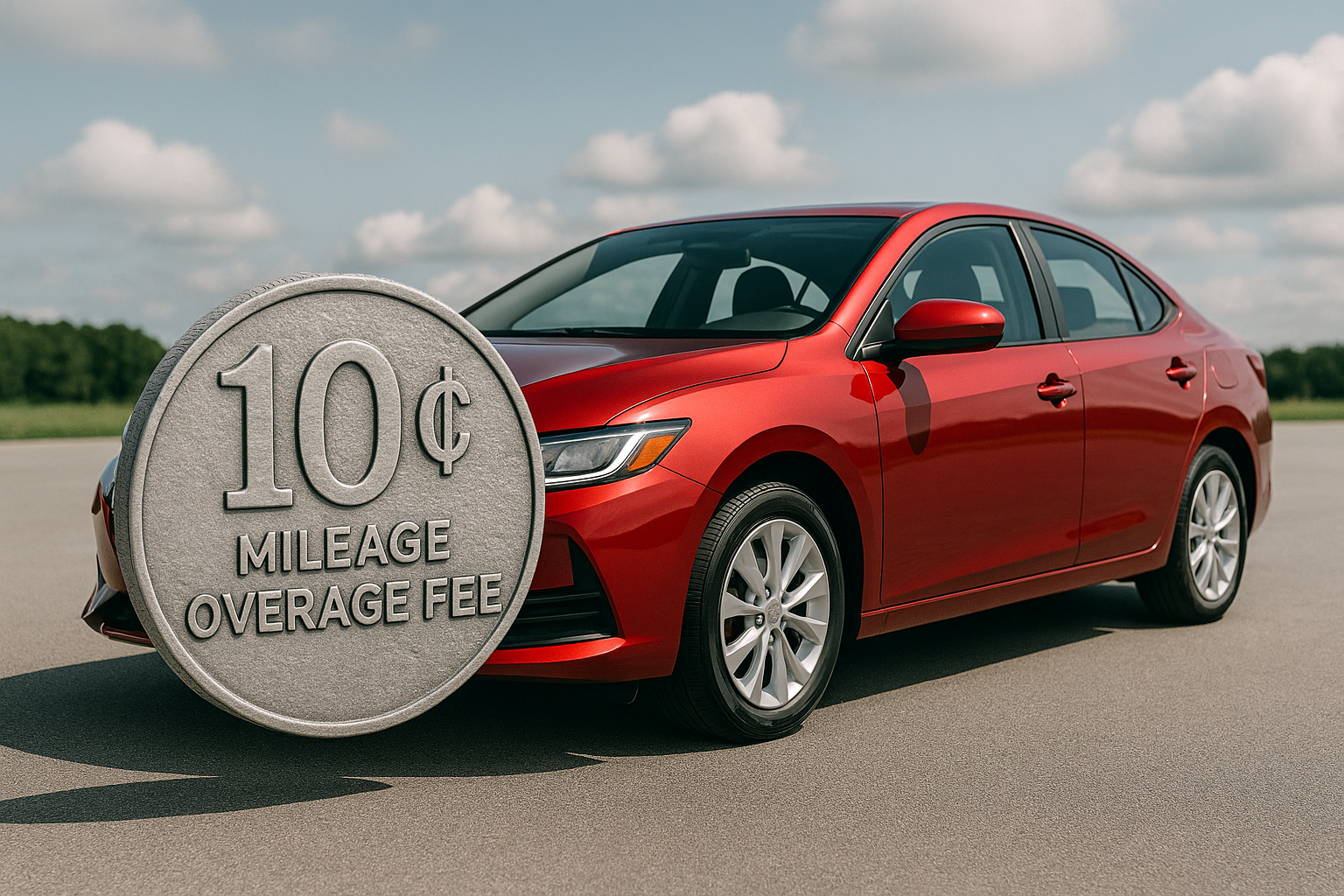
If you go over the mileage limit on a car lease, you’ll pay an excess mileage fee for each mile above your allowance when you return the vehicle. The rate is set in your lease contract—commonly $0.15 to $0.30 per mile for mainstream vehicles and higher on luxury or specialty models. You can often reduce the cost by pre-purchasing miles at a lower rate, extending the lease with added miles, or exercising your lease-end purchase option to avoid mileage penalties altogether.
How Mileage Limits Work on a Lease
Most consumer leases are closed-end agreements that set a total mileage allowance for the full term—say, 30,000 miles on a 36‑month lease. That number isn’t a monthly cap; it’s a total you can use flexibly. At grounding (when you return the car), the lender records the odometer and compares it to your contracted allowance. Any excess triggers a per-mile fee spelled out in your contract.
Manufacturers price leases around typical use (often 10,000, 12,000, or 15,000 miles per year). Higher annual allowances raise the monthly payment because the car is expected to be worth less at lease-end. If you exceed the allowance, the lender recoups that extra depreciation via the excess mileage charge.
What Actually Happens If You Go Over
Nothing changes mid-lease—you keep driving even if you pass the allowance before the term ends. The reconciliation happens at turn‑in:
- An inspector records the odometer and checks for excess wear and tear (a separate evaluation from mileage).
- The lender calculates miles over the allowance and multiplies by the per‑mile rate in your contract.
- You pay the excess mileage fee, any wear-and-tear charges, and usually a disposition fee unless you lease or buy another vehicle with the same captive lender.
If you don’t pay promptly, late fees can apply and the unpaid balance can be sent to collections, which may affect your credit. Some states tax lease-end charges, including excess mileage; others don’t. Your lease paperwork or the lender’s final invoice will show taxes where applicable.
Typical Excess Mileage Rates
Per‑mile charges vary by brand and model. These ranges are common, but your actual rate is whatever appears in your signed lease:
- Mainstream brands: about $0.15–$0.30 per mile
- Luxury brands: about $0.25–$0.50 per mile
- High‑performance or specialty models: can be higher
If you chose a higher allowance at signing, your per‑mile overage rate may be lower than the standard, but not always. The rate is contractual and not negotiable at turn‑in.
Real‑World Cost Examples
Example 1: Modest Overages
36‑month lease with a 36,000‑mile total allowance. You return the car at 39,500 miles. Excess = 3,500 miles. If your contract is $0.25/mile, the overage is 3,500 × $0.25 = $875.
Example 2: Substantial Overages
36‑month lease with a 30,000‑mile total allowance. You return at 50,000 miles. Excess = 20,000 miles. At $0.30/mile, you owe $6,000. In a case like this, buying the car may be cheaper than paying the fee and walking away—run the numbers before turn‑in.
Over Mileage vs. Wear‑and‑Tear
Mileage and wear are billed separately. You could have low miles and still pay for damaged wheels or a cracked windshield, or have high miles and a clean car and only owe mileage. Lenders set a residual value assuming typical condition and your contracted mileage; the per‑mile fee covers the extra depreciation that high miles cause. It doesn’t replace wear‑and‑tear assessments, and one doesn’t cancel out the other.
Ways to Reduce or Avoid Excess Mileage Charges
1) Buy Extra Miles Before You Return
Many lenders let you pre‑purchase additional miles during the lease, often at a lower rate than the end‑of‑term penalty. If you spot the trend early, this can save money. Policies vary: some captives allow adding miles anytime before your final inspection; others limit changes to the first 12–18 months. Prepaid miles are usually nonrefundable.
2) Lease Extension With Added Miles
If you need more time and miles, ask about a formal lease extension. Some lenders will extend for a few months and add a prorated mileage allowance at a published rate. Extensions without extra miles simply give you more time; they won’t erase an existing overage.
3) Buy the Car at Lease‑End
When you exercise the purchase option, excess mileage fees are typically waived because you aren’t returning the car. Compare the buyout (residual plus any fees and taxes) to the vehicle’s market value with its actual mileage. If the buyout is competitive and you like the car, purchasing is often the least expensive path when you’re thousands of miles over.
4) Transfer the Lease
Some leases can be transferred to another qualified driver through the lender’s approved process. If allowed, the remaining mileage—and any potential overage—typically transfers to the new lessee. Be transparent about miles left; you may need to offer an incentive if the allowance is tight. Not all lenders permit transfers, and some keep you partially liable after transfer. Read the fine print.
5) Negotiate at Turn‑In or Use Loyalty Waivers
Captive finance companies sometimes offer loyalty programs that waive a small number of excess miles for returning customers or reduce the disposition fee. Dealers may contribute to overage costs to earn a new sale. These aren’t guaranteed, but asking can help—especially near sales targets or during “pull‑ahead” programs.
Prepaid Miles vs. End‑of‑Term Overage: What’s Cheaper?
| Approach | Typical Rate | When You Pay | Pros | Cons |
|---|---|---|---|---|
| Pre‑purchase additional miles | Often $0.10–$0.20/mi | At signing or mid‑lease | Lower per‑mile cost; spreads expense out | Nonrefundable; you pay even if you don’t use them |
| Pay excess mileage at turn‑in | Often $0.15–$0.50/mi | End of lease | Pay only for miles actually used | Higher rate; big one‑time bill |
How to Tell If You’re on Track
A quick pacing check prevents surprises. Divide your total allowed miles by your lease months to get a monthly budget, then compare to your actual average. For example, 36,000 miles over 36 months is 1,000 miles per month. If you’re averaging 1,300 per month six months in, you’re trending 300 over per month—roughly 10,800 extra miles by the end. That’s a strong signal to buy miles early or adjust driving.
Simple habits help:
- Log odometer readings monthly (set a recurring phone reminder).
- Use a mileage‑tracking app if your car or insurance app already captures trips.
- Budget for seasonal spikes (road trips) by aiming under budget in quiet months.
Early Return, Trade‑In, and Other Edge Cases
Early Termination
If you end the lease early, most lenders prorate your mileage allowance to the return date and can charge for overage beyond that prorated limit. Early termination can also trigger substantial fees unrelated to mileage. Request a written payoff and an inspection estimate before deciding.
Trading Into Another Lease
Dealers sometimes “roll” excess mileage charges into a new lease or purchase. That simply raises your new payment; it isn’t a discount. Compare this to paying the fee outright or buying the current car if the buyout makes sense.
Moving or Life Changes
If your commute changes, contact your lender early. Some allow a one‑time mileage adjustment at a better rate. If not, pre‑purchase what you need or consider alternatives like a lease transfer.
When Buying the Car Makes More Sense
Two numbers matter: your lease‑end buyout price and the car’s market value with its actual mileage and condition.
- If market value is at or above the buyout, buying is usually cheaper than paying mileage fees and walking away.
- If market value is far below the buyout, buying may be a bad deal even though it avoids mileage charges—you’d be overpaying for the car.
Get quotes from multiple sources (franchise dealer, used‑car retailer, and private‑party estimates) using your true mileage. Compare those to the buyout on your contract. Don’t forget sales tax on the buyout where applicable.
Common Myths About Mileage Overages
- “I’ll be charged as soon as I cross the limit.” On closed‑end leases, charges only apply at return, not mid‑lease.
- “Returning early avoids mileage fees.” Lenders typically prorate miles to your return date; you can still owe overage.
- “I can reset the odometer.” Tampering with an odometer is illegal and carries severe penalties. The return inspection uses certified readings and documented history.
- “New tires or detailing will erase mileage costs.” Condition and mileage are separate line items.
How Dealers and Lenders Calculate the Bill
The math is straightforward: Over miles × Per‑mile rate = Overage charge. Add any wear‑and‑tear charges and the disposition fee. Some lenders round to the nearest mile; others use the exact reading. Your inspection report will list the odometer reading and line‑item charges, and you’ll receive an itemized invoice. If you disagree with the odometer reading or inspection, contact the lender promptly—many offer a dispute or re‑inspection process.
Planning Your Next Lease If You Drive a Lot
If you consistently exceed average mileage, set your next lease up for success:
- Select a higher annual allowance (15,000–20,000 miles) upfront; the monthly increase is often cheaper than overage fees.
- Ask about prepaid miles at signing and the policy for adding more later.
- Compare leasing vs. buying. High‑mileage drivers often come out ahead financing a car and keeping it beyond the warranty period.
- Evaluate telematics or insurance programs that align with your actual use.
Decision Guide: Best Option Based on Your Situation
| Your Situation | Likely Best Move | Why It Helps |
|---|---|---|
| Under 2,000 miles over projected | Pay at turn‑in or ask for a loyalty waiver | Small bill; limited savings from complex changes |
| 2,000–8,000 miles over projected with months left | Pre‑purchase miles now | Lower rate than end‑of‑term fees; caps further exposure |
| 10,000+ miles over projected | Compare buyout vs. market value | Buying often beats a large mileage penalty |
| Allowance no longer fits (new job or long commute) | Ask for a mileage adjustment or consider a lease transfer | Resets expectations; avoids compounding overage |
What to Do 90 Days Before Turn‑In
Use the last three months to finalize your plan:
- Pull your payoff/buyout quote and confirm your per‑mile rate.
- Get market value estimates using your true mileage.
- Schedule a pre‑return inspection if offered; it’s usually free and clarifies costs.
- Ask about loyalty waivers, pull‑ahead programs, or the ability to buy a few final miles.
- Decide: pay and return, buy the car, extend, or transfer (if still permitted).
Frequently Asked Questions
Do I pay mileage penalties if I buy the car at lease‑end?
Usually not. When you purchase the vehicle, the lender doesn’t assess an excess mileage fee because the car isn’t being returned. You’ll pay the buyout price plus applicable taxes and fees instead.
Can I add miles to my lease after I sign?
Often yes, but it depends on the lender. Many allow a one‑time mileage increase or the purchase of additional miles mid‑lease at a lower rate than the end‑of‑term penalty. Call your lease servicer for the specific policy and deadlines.
Are excess mileage charges negotiable at turn‑in?
The per‑mile rate is contractual and rarely negotiable. However, some captives offer small loyalty waivers for returning customers, and a dealer may contribute to your fees to earn your next sale. Ask, but don’t rely on a reduction.
What happens if I return the car early and I’m over miles?
Most lenders prorate your mileage allowance to the return date and can charge for overage beyond that prorated limit. Early termination can also trigger additional fees, so request a full payoff and an estimate before proceeding.
Will insurance cover excess mileage fees?
No. Auto insurance covers accidents and specified losses, not contractual lease charges like excess mileage or disposition fees. These costs are your responsibility under the lease agreement.
Is the mileage allowance per year or total?
It’s a total allowance for the entire lease term, even though it’s commonly quoted per year. You can front‑load or back‑load your miles; only the total at turn‑in matters.
Can I reduce my allowance mid‑lease for a refund if I’m under miles?
Rarely. Some lenders sell prepaid miles but don’t buy them back. If you’re trending under, you’ll likely just return the car under the limit; you generally won’t receive a credit unless your contract explicitly provides one.