
Quick Answer
To buy a car from a private seller safely, verify the vehicle and the seller before you meet, insist on a thorough inspection and test drive, and handle payment and title transfer in a controlled, documented way. Run a VIN-based history report, check for liens, meet in a public and secure location, use a trusted mechanic for a pre-purchase inspection, and complete the correct state paperwork (title transfer, bill of sale, odometer disclosure) before handing over funds.
Set Your Plan and Budget First
Start with a clear budget that covers the purchase price plus tax, title and registration fees, inspection costs, and near-term maintenance such as fluids, filters, tires, or brakes. Research fair market values using multiple sources—Kelley Blue Book, Edmunds, and regional listings—to understand price ranges for the exact year, trim, mileage, options, and condition. Check insurance premiums for the model you’re targeting; you can provide the VIN to your insurer for an exact quote. If you’ll need financing, get preapproved for a private-party auto loan through a credit union or bank and confirm their requirements for title, lien release, and any inspection they may mandate.
Verify the Car and Seller Before Meeting
Ask for the VIN and Key Documents
Request the full 17-character VIN, a clear photo of the current title (front and back), a copy of the registration, any lien information, maintenance records, and the seller’s full legal name as printed on the title. The name on the title must match the person you’re dealing with. If someone claims to be selling for a relative or “friend,” proceed carefully—this is common with curbstoners (unlicensed dealers flipping cars). If the true owner can’t attend, ask for a notarized power of attorney authorizing the signer.
Run History and Safety Checks
- NMVTIS report: Use an NMVTIS-approved provider to check for title brands (salvage, rebuilt, flood), prior total loss, and multistate title history.
- NICB VINCheck: Run the free National Insurance Crime Bureau tool to screen for theft and total-loss records.
- Carfax/AutoCheck: These can add accident reports, service entries, mileage records, and ownership count. No single database is complete—use more than one source.
- Recall status: Enter the VIN at NHTSA.gov/recalls to see open safety recalls; dealers fix safety recalls for free.
- Lien check: If the title is not marked “Lien Released,” ask for a current payoff letter from the lender with the account number, payoff amount, and title release instructions. Call the lender using a number you look up independently to confirm.
Screen the Seller
Ask direct questions: how long they’ve owned it, where it was serviced, accident or flood history, and why they’re selling. Compare their answers to dates and mileage on the history report. Be wary if the car is being sold shortly after purchase, if the price is far below market without explanation, or if the seller refuses basic verification, won’t share the VIN, or pushes for a quick sale without inspection.
Meet Safely and Inspect Thoroughly
Choose a Safe Location
Meet during daylight at a police “safe exchange” zone, a bank branch, or a busy public place with cameras. Bring a friend. Ask to see the seller’s driver’s license and confirm it matches the name on the title and bill of sale. Keep your wallet and phone secure and avoid carrying large amounts of cash. For the test drive, verify the seller’s insurance and ensure you have a valid license; some sellers may request proof of coverage for the drive.
Physical Inspection Checklist
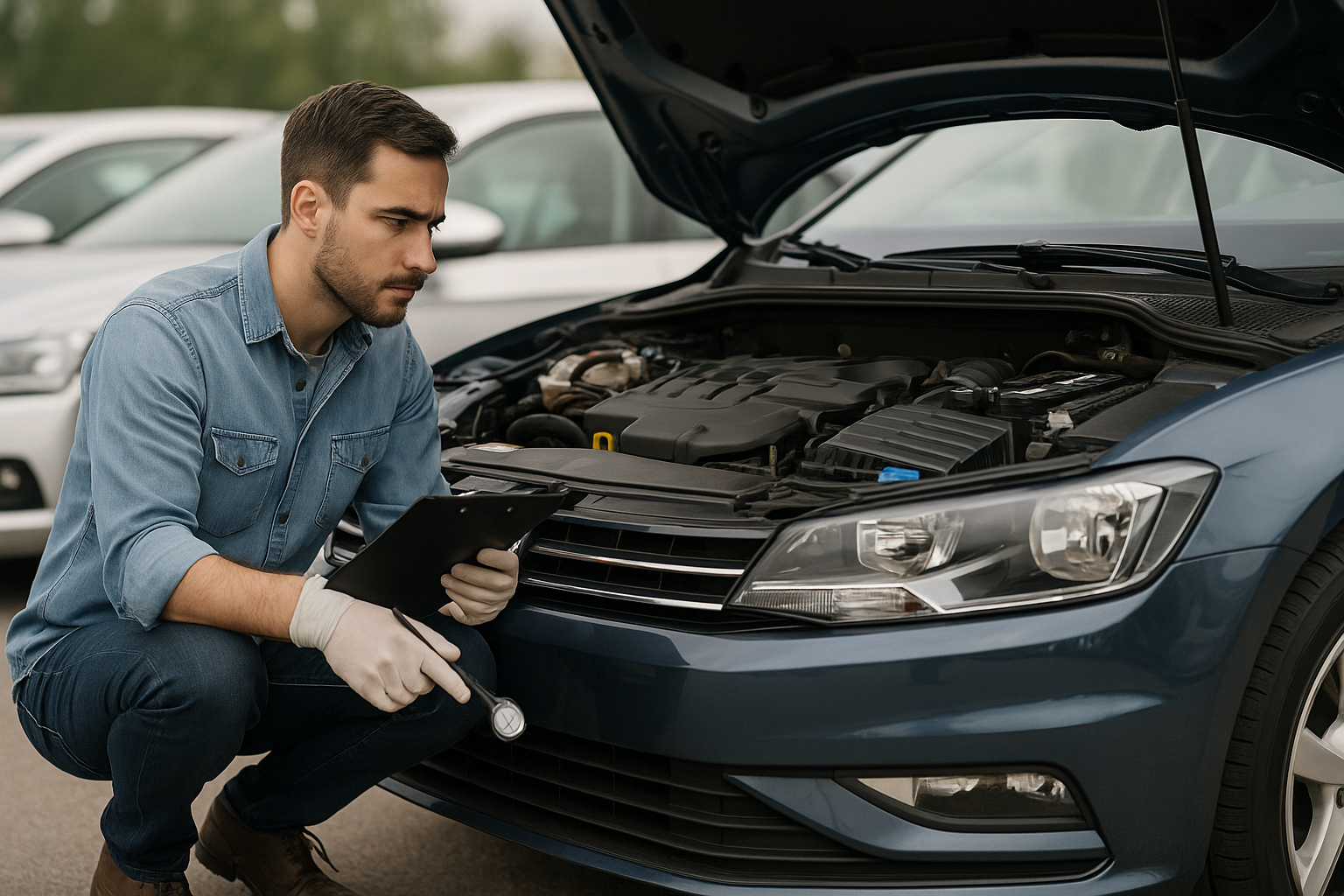
Walk around the car slowly and look for consistent panel gaps and paint. Kneel to check underbody areas, rocker panels, and subframes for rust or damage. Use this checklist:
- VIN match: Verify the VIN plate on the dashboard, the sticker on the driver’s door jamb, and any stamp under the hood all match the title.
- Flood indicators: Musty odor, water lines in the trunk, sand or silt under carpets, foggy headlights, or corrosion on seat rails and under the dash.
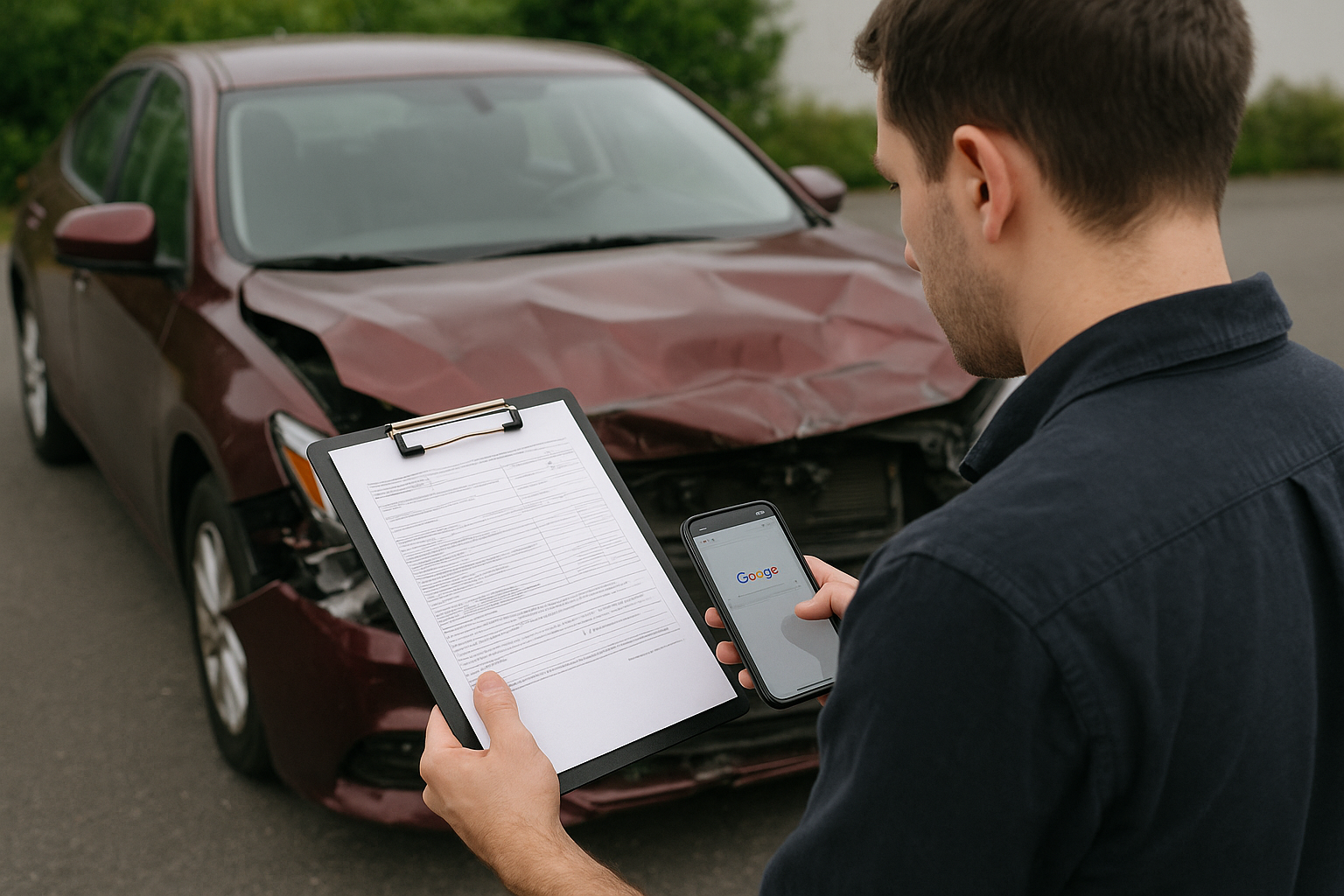
- Accident clues: Overspray on trim or rubber seals, mismatched paint or orange peel, non-OEM welds, uneven panel gaps, or airbag lights that don’t illuminate briefly at startup and then turn off.
- Tires and brakes: Even tread wear and matching brands suggest proper alignment; edges worn or cupped tread, pulsation, or shaking on braking point to suspension or rotor issues.
- Fluids: Check oil (color, level), transmission fluid (color, odor), coolant (no oil contamination), brake fluid (not dark), power steering, and look for leaks beneath the car and around gaskets.
- Belts and hoses: Look for cracks, swelling, dry rot, or soft spots.
- Electronics: Test every switch—windows, locks, mirrors, AC/heat, radio, lights, wipers, seat heaters, sunroof, parking sensors, and backup camera.
- Keys and security: Confirm you’re getting all keys/fobs and that immobilizer and remote functions work. Replacing modern fobs can be pricey.
- OBD-II scan: Plug in a scanner to check for stored or pending codes and readiness monitors. Recently reset monitors can indicate cleared codes; be cautious.
Conduct a Proper Test Drive
Start the engine cold to catch lifter tick, timing chain noise, or smoke at startup. On the drive, vary speeds and include city streets and highway. Check steering for straight tracking, listen for clunks over bumps, and test acceleration, braking, and transmission shifts in manual and automatic modes if applicable. Engage 4WD/AWD or drive modes if equipped. Watch the temperature gauge for overheating. After driving, recheck for new leaks and odors.
Get an Independent Pre-Purchase Inspection (PPI)
Arrange a PPI with a qualified mechanic who has no relationship with the seller. Expect to pay $100–$300 for a general inspection, more for luxury, EV, or specialty vehicles. A thorough PPI includes a lift inspection, brake and suspension measurements, leak checks, and verification of maintenance items like timing belt intervals and fluid changes. For certain engines, compression or leak-down tests and borescope inspections may be warranted. Use the report to renegotiate or walk away if issues are significant.
Confirm Title Status, Liens, and Ownership
Understand Common Title Labels
| Title Status | What It Means | Risks/Considerations |
|---|---|---|
| Clean | No brands; not declared total loss | Still verify accidents and mileage via reports and inspection |
| Salvage | Insurer deemed a total loss | Greatly reduced value; insurance and financing hurdles; not road-legal until rebuilt |
| Rebuilt/Reconstructed | Previously salvage; repaired and inspected | Lower resale value; inspect repair quality and airbag status closely |
| Flood/Water | Significant water damage | Electrical and corrosion issues can surface later; hard to insure |
| Bonded | Ownership proved with a surety bond | Check state rules; potential claims against title until bond expires |
Handling Liens
If there’s an active lien, the seller’s lender holds the title. The safest approach is to meet at the lender’s branch, pay the payoff amount directly to the lender, and have the seller receive any difference. Get a lien release letter or receipt. Some lenders mail the physical title or send an electronic lien release to the buyer or DMV; clarify the timeline before paying. If the seller can’t produce payoff details or resists meeting at the bank, do not proceed.
Verify VIN Consistency and Owner Identity
The VIN on the car must match the title and bill of sale. The seller’s name and address should match the title, and they should show valid ID. If the car is titled in a business name, request proof of authority for the signer (e.g., corporate resolution, dealer reassignment form, or business ID). Walk away if anything looks altered, scratched off, or inconsistent.
Close the Deal Securely
Choose a Safe Payment Method
| Method | Pros | Cons/Risks | Best Practice |
|---|---|---|---|
| Bank transfer (wire) | Fast and traceable | Generally irreversible; routing/account typos are costly | Initiate at your bank; verify recipient details and confirm receipt before title exchange |
| Cashier’s check | Common for private sales | Counterfeits exist | Meet at the issuing bank so a teller confirms funds and authenticity |
| Escrow (e.g., Escrow.com) | Protects both parties | Fees; fake escrow sites mimic real ones | Use only well-known, verified services; type the URL yourself and verify inside your account |
| Cash | Immediate | Safety and verification issues | Exchange at a bank branch and deposit immediately |
| Apps (Zelle, Venmo) | Fast for small amounts | Limits, scams, little buyer protection | Generally avoid for vehicle purchases |
Never send deposits to “hold” a car you haven’t seen. If a deposit is unavoidable, use real escrow—not gift payments, wire-to-strangers, or crypto.
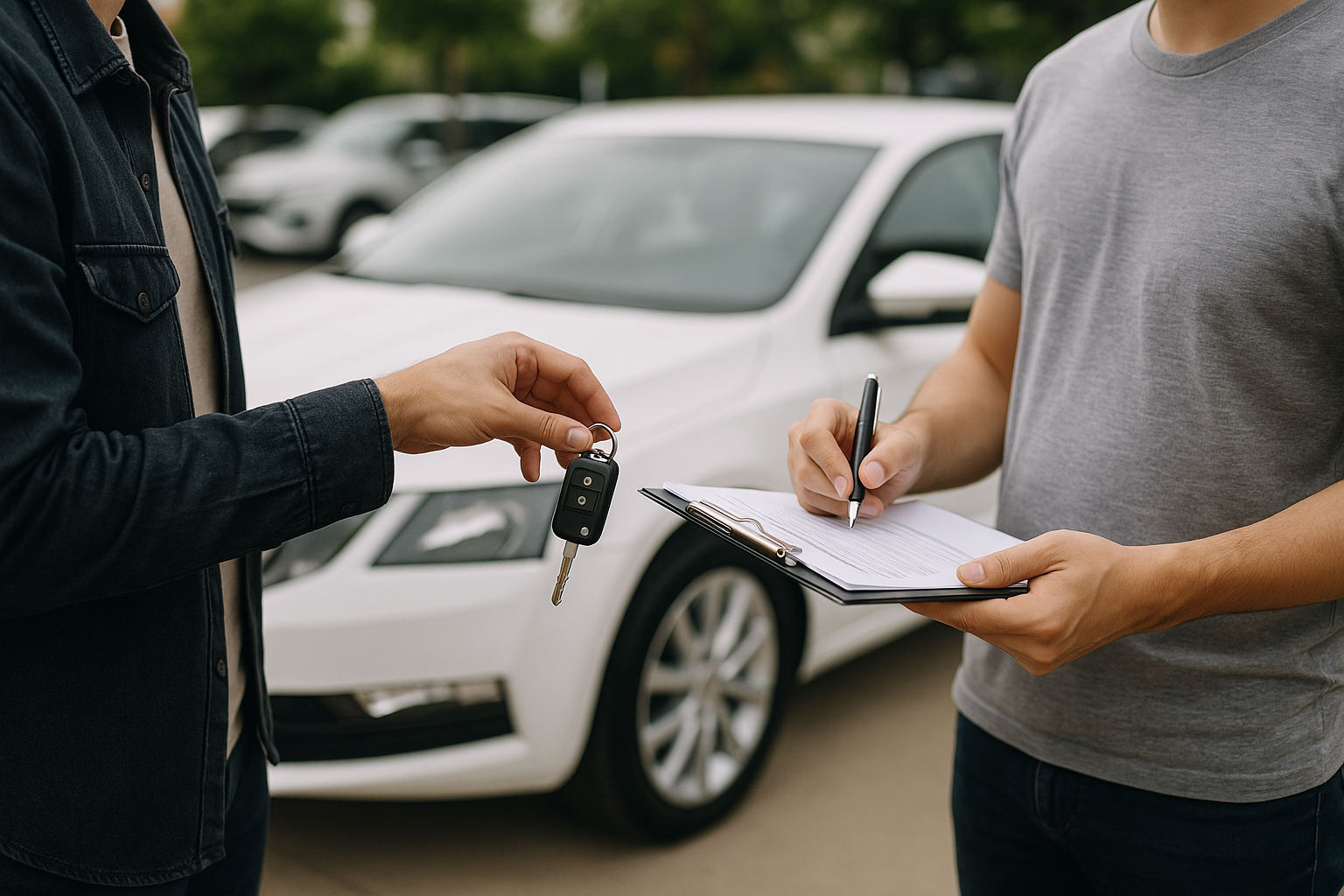
Complete the Right Paperwork
- Title assignment: The seller signs the title to you. Some states require notarization of the seller’s signature (e.g., Pennsylvania, Ohio, North Carolina, Louisiana, Montana). Bring IDs and a notary if needed.
- Odometer disclosure: Federal law requires written disclosure for most vehicles under 20 model years. Use your state’s form if the title lacks a disclosure section.
- Bill of sale: Include buyer and seller names and addresses, VIN, year/make/model, purchase price, date and time, odometer reading, and “as-is, no warranties” unless stated otherwise.
- Emissions/safety certificate: Some states require a recent smog or safety inspection. For example, in California the seller must provide a smog certificate within 90 days of sale.
- Release of liability/notice of transfer: The seller files this promptly (often within a few days) to stop responsibility for tickets or accidents after the sale.
- Service records and manuals: Collect receipts, warranty booklets, spare keys, and any transferable warranties.
Plates, Temporary Tags, and Insurance
Plate rules vary: some states require the seller to keep their plates; others allow plates to transfer with the car. Check your DMV’s guidance. If you need to drive the car home, arrange temporary tags if required and call your insurer to bind coverage immediately. Do not drive an unregistered or uninsured vehicle on public roads; if paperwork or insurance can’t be completed that day, use a tow service.
Avoid Common Scams
- Curbstoning: Unlicensed dealers pose as private sellers. Red flags include multiple cars for sale, mismatched names on documents, and reluctance to meet at a residence or show ID.
- Title washing: Cars move across states to remove brands. Cross-check NMVTIS, the physical title, and state records; be suspicious of recent out-of-state titles.
- Cloned VINs: A stolen car is given a clean VIN from a similar vehicle. Check VINs in multiple locations for tampering and verify with reports.
- Fake cashier’s checks: If you’re the seller, insist on meeting at the issuing bank. As a buyer, never accept “overpayment” schemes or pressure to refund a difference.
- Phony escrow sites: Scammers create lookalikes. Independently navigate to the escrow provider, confirm HTTPS and company details, and verify the transaction inside your account.
- Deposit tricks: Requests for gift cards, cryptocurrency, or friends-and-family payments are a hard stop.
Negotiate With Facts
Use your research and PPI results to justify your offer. Bring printouts or screenshots of comparable listings and note specific, quantifiable issues: tires at 4/32”, warped rotors, valve cover leak, weak battery, or overdue timing belt. Factor in reconditioning costs based on local shop rates and parts availability. Be polite but firm—your best leverage is a willingness to walk away. If you agree on a price, document any promised items or actions in writing (e.g., “seller will include winter wheels” or “seller will replace windshield before transfer”).
After You Buy: Registration and Next Steps
Register the vehicle within your state’s required window, pay sales or use tax, and obtain new plates if applicable. Many states allow appointments or online submissions to speed up title work; bring ID, proof of insurance, the signed title, the bill of sale, inspection certificates, and a lien release if applicable. Keep copies of everything, plus photos of the odometer and VIN.
Schedule baseline maintenance: oil and filter, brake fluid test, coolant test, cabin and engine air filters, transmission and differential fluids per the service interval, and spark plugs as required. Update your address with the manufacturer to receive recall notices and schedule any open recalls at a dealer. If your PPI flagged items, book repairs promptly to prevent small issues from becoming costly.
State-Specific Tips Worth Checking
Before finalizing, confirm these points on your DMV’s website:
- Notary requirements for title signatures and whether both parties must be present.
- Emissions or safety inspections needed for transfer, especially for out-of-state cars.
- Whether plates stay with the seller or vehicle, and rules for temporary tags.
- Deadlines for title transfer and release of liability after the sale.
- Acceptable proof of insurance for registration and minimum coverage levels.
- Electronic vs. paper title procedures and lien release timelines.
A Practical Flow to Follow
- Pre-screen: Get the VIN, run NMVTIS/NICB and a history report, and confirm there’s no unresolved lien or salvage/flood brand.
- Meet safely: Verify IDs and the title, conduct your inspection and test drive, then schedule an independent PPI.
- Agree on price: Base it on PPI results and market comps, itemizing any needed repairs.
- Set payment plan: Prefer bank-to-bank transfer or a cashier’s check verified at the issuing bank; handle liens at the lender’s branch.
- Paperwork: Complete title assignment, odometer disclosure, bill of sale, and any required notarization or emissions forms.
- Insurance and tags: Bind coverage, obtain temp tags if required, and drive home legally.
- Post-sale: File title and registration, pay taxes, and complete baseline maintenance and recalls.
Frequently Asked Questions
Can I return a car bought from a private seller if I find a problem later?
Generally no. Private-party sales are usually “as-is,” meaning the risk shifts to you once you buy. Your best protection is a thorough inspection, a PPI, and a clear bill of sale that makes no promises beyond what’s stated. If the seller knowingly concealed issues or forged documents, you may have legal remedies, but that’s a dispute—not a guaranteed return.
What’s the safest way to pay a private seller?
Meet at a bank to send a wire or have a teller verify a cashier’s check. If there’s a lien, pay the lender directly at their branch and have the seller receive any remainder. Avoid peer-to-peer apps, gift cards, or crypto. If you use escrow, choose a reputable service and access it by typing the URL yourself.
Should I buy a car with a salvage or rebuilt title?
Only if you fully understand the risks and the price reflects them. Salvage and rebuilt cars can hide structural and electrical problems, carry lower resale value, and be harder or more expensive to insure or finance. A meticulous inspection and documentation of repairs are essential. Many buyers avoid them unless the discount is significant and repair quality is proven.
How do I check if a car has a lien?
Examine the title for a listed lienholder and ask the seller for a recent payoff letter. Then call the lender using a phone number you find independently to confirm the payoff amount and release process. Some states also offer online lien lookups. Do not complete the sale until you have a clear, verifiable path to lien release.
Do I need insurance before I drive the car home?
Yes in most states. Some insurers offer a short grace period for new purchases, but don’t rely on it. Call your insurer to bind coverage effective the day you pick up the car and obtain proof of insurance for registration and driving.
Is a pre-purchase inspection really necessary for cheaper cars?
Yes. A PPI can uncover issues that turn a “cheap” car into an expensive one—head gaskets, transmission problems, structural rust, or flood damage. The cost of a PPI is small compared with the repair bills it can help you avoid.
What should be included in the bill of sale?
List buyer and seller names and addresses, VIN, year/make/model, purchase price, date and time, odometer reading, and an “as-is, no warranties” statement unless a specific warranty is promised. Both parties should sign and retain copies. Many states provide a standard form you can download from the DMV site.