
Quick Answer
To find out if a car has a salvage title, start by getting the full 17-character VIN from the seller and clear photos of the current title (front and back). Run the VIN through an NMVTIS-approved provider, check the free NICB VinCheck, consider a paid history report (Carfax/AutoCheck), and verify title status with the state DMV. Also inspect the physical title for branding language like “Salvage,” “Rebuilt,” “Flood,” or “Not Actual Mileage,” and review any repair and inspection paperwork if the vehicle was rebuilt.
Why Salvage Status Matters
A salvage title means the vehicle was declared a total loss by an insurer or branded by a state following severe damage, theft recovery, flood, or other major events. Salvage cars typically cannot be legally driven until they are repaired and pass a state inspection; after that, they may be retitled as “rebuilt” or “reconstructed.” This affects far more than registration. Many lenders won’t finance salvage or rebuilt vehicles, insurers often limit coverage to liability only, manufacturer warranties are usually void, and resale values are commonly 20–40% lower than comparable clean-title cars. Confirming a car’s true title status protects both safety and budget.
What “Salvage” Actually Means (and Related Brands)
Title brands are applied by state motor vehicle agencies and follow the vehicle for life. Wording varies by state, but common brands include:
- Salvage: The vehicle was deemed a total loss or otherwise branded after major damage. Not legal to drive on public roads until repaired and inspected under state rules.
- Rebuilt/Reconstructed: The vehicle was previously salvage. It has been repaired and passed a state inspection but still carries a permanent brand signaling past salvage damage.
- Junk/Non-repairable/Certificate of Destruction: Not eligible for road use; parts or scrap only. Cannot be retitled for operation.
- Flood/Water Damage: Indicates significant water intrusion. May coexist with salvage or be issued as a separate brand depending on the state.
- Hail Damage: Used in some states when hail damage triggered a total loss; impact on insurability and value still applies.
- Lemon/Manufacturer Buyback: Repurchased by the manufacturer under lemon laws. Not salvage but still a brand that affects value and required disclosures.
Thresholds for declaring a vehicle salvage differ by state and insurer. Some states use a percentage of the vehicle’s pre-damage value (often 60–90%), while others rely on an insurer’s total-loss determination. Because definitions vary, always confirm what a specific brand means in the state that last titled the vehicle.
Step-by-Step: How to Check If a Car Has a Salvage Title
1) Get the VIN and Photos of the Current Title
Ask the seller for the full 17-character Vehicle Identification Number and crisp photos of both sides of the current title. Compare the VIN on the title to the number on the dashboard plate (driver’s side at the windshield), the driver-door jamb sticker, and any VIN stamp in the engine bay. Mismatches or missing labels can signal prior repairs or tampering. On the title, look for any “Brand,” “Legend,” or “Remarks” area with terms like “Salvage,” “Rebuilt,” “Flood,” “Prior Salvage,” “Junk,” “Non-Repairable,” or “Not Actual Mileage.” If the seller claims a clean title but won’t share title photos, treat that as a red flag.
2) Check Official Sources: NMVTIS and NICB
Run the VIN through an NMVTIS-approved provider. The National Motor Vehicle Title Information System (NMVTIS) is the U.S. Department of Justice system that aggregates title brands, salvage/junk yard entries, and certain insurance total-loss records from states and industry sources. Approved providers charge a small fee and return brand history, the most recent title state, and date. This is the most authoritative way to catch title brands, including those from prior states.
Then use the free NICB VinCheck (from the National Insurance Crime Bureau) to see theft records and some total-loss/salvage claims reported by participating insurers and auctions. It’s not comprehensive, but it can corroborate findings or surface issues not yet reflected elsewhere.
3) Pull a Comprehensive Vehicle History Report
Services like Carfax and AutoCheck compile DMV title events, insurance records, auction announcements, police reports, service visits, and recall information. A good report can reveal when and where a title brand was applied, state-by-state movements, and auction “salvage” announcements with photos. Not every incident is reported to these companies, so use them alongside—never instead of—NMVTIS.
4) Verify With the State DMV
Many state DMVs offer online VIN title lookups for a small fee or free. This confirms the current title brand and status in that state. If the car was last titled in a different state than the seller’s, check that state too. If online lookup isn’t available, you or the seller can request a title abstract. When you retitle or register, the DMV will verify branding; it’s far better to uncover issues before you pay.
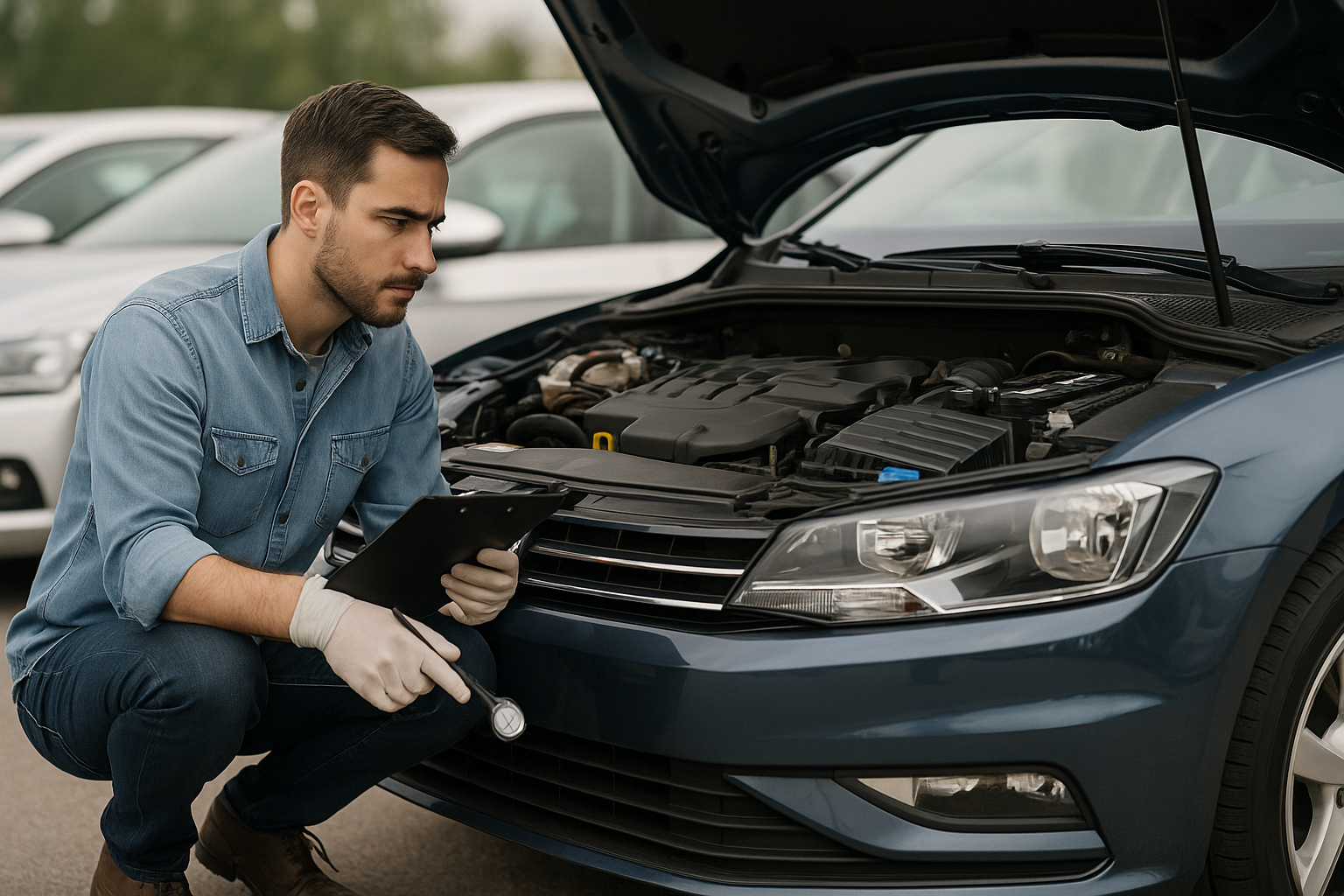
5) Inspect the Car for Signs of Past Salvage
Even if paperwork looks clean, a hands-on inspection can reveal a salvage history:
- Inconsistent panel gaps, overspray, misaligned bumpers, or mismatched paint texture or shade
- Missing or tampered VIN labels, ground-off stamps, or non-factory welds on the frame or unibody
- Airbag warning light, missing SRS covers, or airbags replaced with non-OEM parts
- Fresh undercoating concealing repairs; new headliner in a flood-prone model; corroded wiring/connectors
- Musty odors, sediment in the spare tire well, water line marks behind trim, or rust under seat rails (flood clues)
- Uneven tire wear or steering pull (possible frame, suspension, or subframe issues)
Bring an OBD-II scanner to check for pending or stored fault codes that a seller might have recently cleared.
6) Review Repair and Inspection Paperwork (If Rebuilt)
A legitimately rebuilt vehicle should include a state inspection certificate, receipts for major parts (often with donor VINs recorded), alignment printouts, and before/after repair photos. Confirm the VIN on the inspection certificate matches the car and title. If a seller can’t produce this paperwork, assume the work wasn’t properly documented.
7) Search Auctions and the Open Web
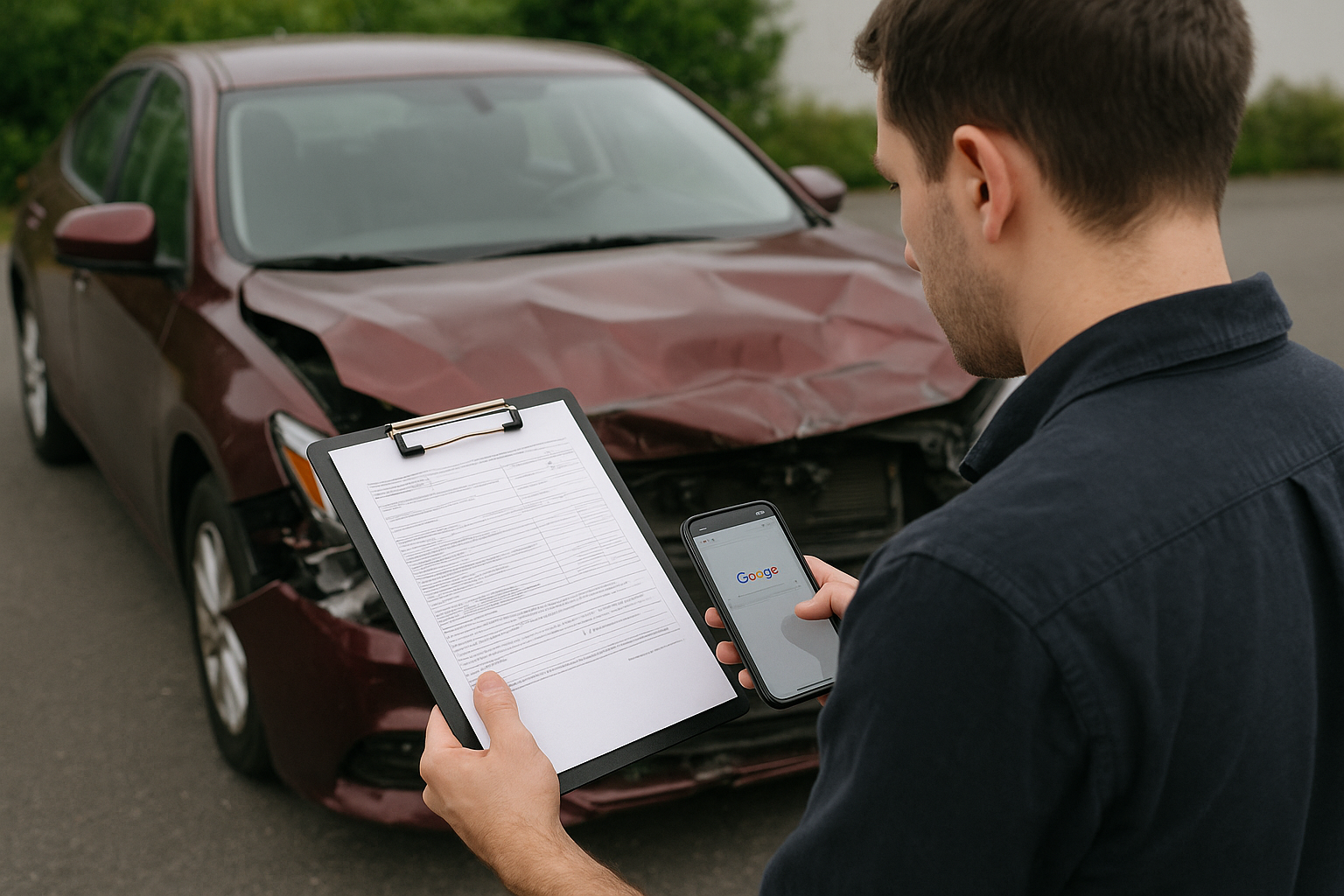
Paste the VIN into search engines and image searches. Look for prior listings on Copart, IAAI, insurance pools, or regional auctions. Many auction archives retain photos and damage descriptions even after sale. Searching the VIN alongside terms like “salvage,” “certificate of destruction,” “flood,” or “biohazard” can expose a past total loss. Check enthusiast forums or marketplace listings for duplicate ads.
8) Get an Independent Pre-Purchase Inspection
Hire a trusted mechanic or body shop experienced with collision and flood repairs. Ask for paint-thickness measurements, underbody and structural checks, suspension geometry measurement, and a full scan of all control modules. A shop that writes collision estimates daily can spot shortcuts, hidden corrosion, and unsafe non-OEM repairs.
Interpreting Results and Next Steps
If any reliable source shows “Salvage” or an equivalent brand, the car either isn’t legally drivable (salvage) or it was previously salvage and is now “rebuilt” after inspection. Either way, the brand follows the vehicle and affects insurance options, financing, and resale value.
Use this checklist to decide your move:
- Does NMVTIS show any brand? Treat that as definitive for branding history.
- If “Rebuilt,” do inspection documents and parts receipts align with photos and report details?
- Can you insure it for the coverage you want? Get a VIN-specific quote before paying.
- Will your lender finance it? Many won’t finance salvage or rebuilt; plan for cash or a specialty lender.
- Is the price discounted enough? Rebuilt cars often sell 20–40% below clean-title comps, and more with flood history.
- Are there walk-away signs? No VIN, withheld title photos, inconsistent stories, or missing inspection paperwork on a rebuilt title.
State-by-State Differences You Should Know
Title branding is state-administered, so details differ:
- Thresholds: Some states apply salvage when repair cost meets or exceeds a percentage of actual cash value; others apply it based on an insurer’s total-loss decision.
- Brand wording: “Rebuilt,” “Reconstructed,” “Prior Salvage,” or “Restored” can mean the same thing across states but use different labels.
- Flood handling: Certain states always issue a specific “Flood” brand after water intrusion; others fold it under salvage.
- Carryover: Brands are intended to carry across state lines, but administrative delays and older records can cause gaps. NMVTIS helps catch cross-state histories.
- Inspection standards: Rebuilt inspections vary widely in rigor. A pass does not guarantee factory-quality repairs.
Because of these variations, always check the most recent titling state and any prior states where the car lived. NMVTIS will list states and dates of title events to guide your search.
Data Sources Compared
| Source | Cost | What It Shows | Limitations | Where to Get It |
|---|---|---|---|---|
| NMVTIS (via approved provider) | Low fee (typically a few dollars) | Official title brands, most recent title state/date, salvage/junk yard entries | No service history; details limited to title/brand events and reported total-loss data | List of providers at vehiclehistory.bja.ojp.gov |
| NICB VinCheck | Free | Theft records and certain total-loss/salvage entries from participating insurers/auctions | Not all insurers participate; not a full title history | nicb.org/vincheck |
| State DMV Title Lookup | Varies by state | Current title status/brand in that state | May not show prior states; some states require mail or in-person requests | State DMV website or office |
| Carfax / AutoCheck | Paid | Multi-source history including title events, auctions, police, service visits, recalls | Data gaps possible; confirm branding with NMVTIS/DMV | carfax.com, autocheck.com |
| Auction Archives (Copart, IAAI) | Usually free to search | Photos and damage descriptions; sale announcements (e.g., Salvage, Flood) | Not every vehicle goes to auction; some archives require login or may expire | copart.com, iaai.com |
| Independent Mechanic/Body Shop | Inspection fee | Structural condition, repair quality, flood evidence, control module scans | Not a legal title source; complements paperwork checks | Local repair facilities |
Common Seller Tactics and How to Respond
Be ready for language that downplays branding and respond with documentation requests:
- “Clean title in hand.” Ask for a photo of the title brand area and run NMVTIS. “Clean” is often used loosely.
- “Rebuilt—just like new.” Request the state inspection certificate, parts receipts, and repair photos. “Rebuilt” always means prior salvage.
- “Minor accident, just cosmetic.” Compare claims against auction photos or history reports. Cosmetic-only total losses are uncommon.
- “Title lost” or “Title pending.” Wait until a replacement title is issued and verified. Avoid bill-of-sale-only deals.
- “From a different state, titles don’t transfer.” Brands are intended to carry forward; verify with NMVTIS and the prior state’s DMV.
Documentation Checklist Before You Pay
- Full VIN matches on the title, dash, door jamb, and history reports
- High-resolution photos of the current title (front and back), registration card, and seller’s ID
- NMVTIS report from an approved provider
- NICB VinCheck results
- Paid history report (Carfax/AutoCheck) if the car’s value warrants it
- State DMV verification of current title status in the last titled state
- For rebuilt cars: state inspection certificate, parts receipts with donor VINs, alignment report, and repair photos
- Pre-purchase inspection report from an independent shop
- Written insurance quote using the VIN and current brand
- For financed purchases: lender confirmation they accept the title brand
How to Spot Title Washing
Title washing occurs when a branded car is moved to a jurisdiction where the brand is downplayed or omitted, then retitled to appear cleaner. NMVTIS has reduced this, but gaps still happen. Protect yourself by checking:
- NMVTIS state-by-state title history for quick back-to-back transfers after an accident or total-loss date.
- Gaps in history reports where mileage or ownership jumps without service records.
- Sellers claiming the brand “fell off” after moving states. Brands should carry forward.
- Auction photos showing clear salvage damage even if the current title appears unbranded.
If you suspect washing, verify with the prior state’s DMV and request additional documentation before proceeding.
Insurance and Financing Considerations
Coverage and lending policies vary, but common patterns include:
- Many insurers offer only liability coverage for rebuilt vehicles; comprehensive and collision may be restricted or cost more.
- Claim payouts are typically based on the reduced market value of a branded car.
- Most mainstream lenders will not finance salvage or rebuilt titles; specialty lenders may require larger down payments and higher rates.
- Manufacturer warranties generally do not apply to salvage/rebuilt cars; many third-party service contracts also exclude them.
Obtain insurance quotes and lender approval using the exact VIN and title brand before you commit.
Negotiation Tips if the Car Is Branded
If you’re still considering a branded-title car, price it realistically and protect your position:
- Start from clean-title fair market value, then discount for branding (often 20–40%) plus any repair shortcomings or flood risk.
- Make the sale contingent on confirmation of the brand, completion of your inspection, and proof of insurability.
- Document all disclosures in writing, including the exact title brand and any known damage history.
- Use secure, traceable payment methods and avoid non-refundable deposits before verification.
Frequently Asked Questions
Is a rebuilt title the same as a salvage title?
No. A salvage title means the vehicle was deemed a total loss and typically cannot be registered for street use. A rebuilt (or reconstructed) title means the vehicle was previously salvage but has since been repaired and passed a state inspection. The rebuilt brand remains on the title permanently.
Can a salvage title be removed?
Generally, no. Once branded, the brand stays with the vehicle. After repairs and a successful state inspection, the title can change from “Salvage” to “Rebuilt” (wording varies by state), but the history of salvage is permanent. Be wary of anyone claiming the brand can be cleared.
Will NMVTIS tell me everything I need to know?
NMVTIS is the most authoritative source for title brands and salvage/junk entries, but it doesn’t include service history, accidents that didn’t result in a brand, or full insurance claim details. Use NMVTIS alongside NICB VinCheck, a paid history report, and a physical inspection for a complete picture.
Can I insure or finance a car with a salvage or rebuilt title?
Insurers often limit coverage on rebuilt vehicles to liability only, and many won’t cover salvage at all. Most mainstream lenders won’t finance salvage or rebuilt titles. Always get VIN-specific insurance quotes and lender confirmation before you buy.
How much less is a car with a rebuilt or salvage history worth?
It varies by model and the nature of the damage, but a rebuilt-title vehicle typically sells for 20–40% less than a comparable clean-title car. Flood or poorly repaired structural damage can drive the discount even lower. Always adjust further for current mechanical or cosmetic issues.
What if the seller won’t provide the VIN or title photos?
Walk away. A legitimate seller should share the 17-character VIN and clear photos of the current title. Without them, you can’t verify branding or run NMVTIS and DMV checks. Lack of transparency is a strong warning sign.