
Quick Answer
Buy new if you plan to keep the car for many years, want the latest safety tech and full warranty coverage, and can secure a strong financing rate or qualify for EV incentives. Buy used if you want the lowest total cost, can live without custom ordering, and you’re willing to verify the car’s condition through a certified program or a pre-purchase inspection. For many buyers, a lightly used or certified pre-owned car (2–4 years old) strikes the best balance between price, reliability, and features. Always compare total ownership cost—not just the sticker price—before deciding.
How to make the decision
The new-versus-used choice hinges on total cost of ownership (TCO), not just purchase price. TCO includes depreciation, insurance, financing interest, taxes and fees, fuel or electricity, maintenance and repairs, and eventual resale value. New cars cost more upfront but carry lower repair risk and often better interest rates. Used cars cost less to buy and insure and lose value more slowly, but they need careful vetting and sometimes higher loan rates.
Run the numbers over the period you expect to own the car. A quick method: add your estimated monthly payment + insurance + fuel/charging + expected maintenance, then subtract an estimated resale value at the end of your ownership to see what you truly spend. If you’re trading in a vehicle, note that most states tax the net price after trade-in, which lowers your effective sales tax whether you buy new or used.
What you get with a new car
Upsides
A new car gives you a clean history, full warranty coverage, and the latest safety and infotainment features. Bumper-to-bumper warranties commonly cover 3 years/36,000 miles, with powertrain coverage around 5 years/60,000 miles. Many EV batteries carry at least 8 years/100,000 miles of coverage, and certain emissions components in some states are covered for up to 10 years/150,000 miles. You can choose exact colors, options, and trims, and many manufacturers offer subsidized financing—sometimes in the 0–3.9% range for well-qualified buyers—which helps offset the higher price. New-car insurance can also offer “new car replacement” endorsements in the first years, adding peace of mind.
Trade-offs
The first owner takes the steepest depreciation hit. A typical new car may lose 10–15% when it leaves the lot and around 20–30% in the first year, then about 40–60% over five years depending on model and market conditions. Insurance and registration (in value-based states) are usually higher. You’ll also pay destination and documentation fees, and sales tax on the full purchase price (minus trade-in where applicable). If you’re ordering a specific configuration, expect potential wait times or limited ability to negotiate compared with in-stock units.
What you get with a used car
Upsides
The main advantage is lower cost, both at purchase and in ongoing expenses. The original owner already absorbed much of the depreciation, so your car’s value tends to fall more slowly. Insurance premiums are often lower, and so are registration fees in many states. Buying 2–4 years old often nets modern safety tech (automatic emergency braking, blind-spot monitoring, Apple CarPlay/Android Auto) without the new-car price. You can also see real-world reliability data for the exact model years you’re considering.
Trade-offs
Loan interest rates on used cars are commonly 1–3 percentage points higher than new, and condition varies widely. Plan and budget for maintenance items that come due with age and mileage—brakes, tires, 12-volt battery, fluids, and on some models, timing belt service or direct-injection carbon cleaning. Unknown history is a risk: accidents, flood damage, odometer tampering, or deferred maintenance can turn a bargain into an expensive mistake without proper checks. Geography matters too—cars from salt-belt regions may have underbody rust that adds repair cost.
Certified pre-owned versus regular used
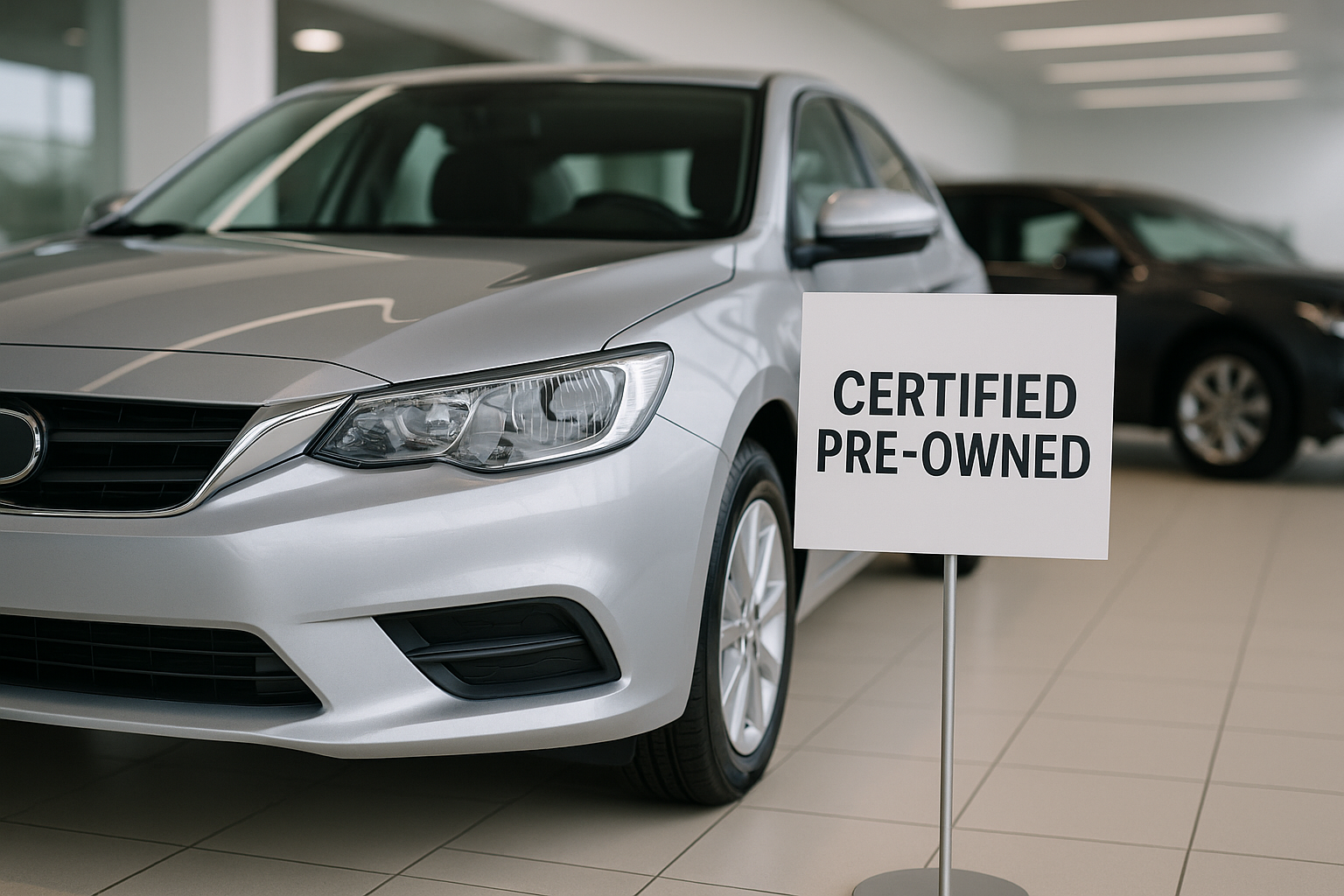
Certified pre-owned (CPO) cars are inspected by the manufacturer’s dealership network, meet age and mileage limits, and include extended warranty coverage from the automaker. You’ll often pay 5–10% more than a comparable non-CPO car, but you get roadside assistance and warranty protection that can be worth it if you’re risk-averse. Programs vary by brand, so compare what’s covered (and for how long) beyond the original warranty, any deductible amounts, and whether maintenance or loaner vehicles are included. Non-CPO used cars usually cost less but put the burden of inspection and protection on you; mitigate that with a paid pre-purchase inspection and a thorough history check.
New vs. used at a glance
| Category | New | Used (2–6 years) |
|---|---|---|
| Purchase price | Highest; sales tax on full amount; destination/doc fees | Lower; tax based on lower price; fees vary |
| Financing | Captive offers can be 0–3.9% APR for top credit; otherwise 5–9% | Typically higher APR (often 7–13%) depending on credit and lender |
| Depreciation | Steepest years 0–3; 20–30% first year common | Slower; earlier depreciation already absorbed |
| Warranty | Full coverage; powertrain 5yr/60k typical; EV battery 8yr/100k+ | Limited or expired; CPO adds coverage; EV battery may still be covered |
| Insurance | Higher premiums; gap often recommended with low down payment | Lower premiums; gap optional but useful on small down payments |
| Features & safety | Latest tech and ADAS; warranty on electronics | Most 2019+ cars have modern ADAS; verify specific features |
| Risk | Low mechanical risk; recalls handled free | History/condition vary; PPI and VIN checks essential |
| Resale | Lower resale percent in first years | Better value retention per year owned |
Financing, insurance, and the real monthly cost
Interest rates have been elevated in recent years, so the APR difference between new and used can materially change your total cost. Example: a $35,000 new car at 4.0% for 60 months runs about $644 per month before tax; a $22,000 used car at 8.5% for 60 months is about $453. Insurance can differ by $30–$100 per month depending on vehicle value and coverage. Add fuel or charging costs and routine maintenance to that monthly picture to compare fairly. If you have a trade-in, evaluate its equity carefully—rolling negative equity into a long loan raises both payment and risk.
Follow a simple guardrail like the 20/4/10 rule if possible: 20% down payment, a loan no longer than 4 years, and all transportation costs (payment, insurance, fuel/charging, parking) under 10% of gross income. If that’s not feasible, shorten the loan as much as you can and avoid stretching beyond 72 months; long loans reduce flexibility and increase interest paid. Get a credit union or bank preapproval before visiting dealers so you can benchmark any finance office offer, and decline high-margin add-ons you don’t need (paint sealants, nitrogen, VIN etching).
Reliability, warranty, and repair planning
If reliability is your top concern, shortlist brands and models with strong long-term records and inexpensive parts. Many modern engines and transmissions can reach 150,000–200,000 miles with regular maintenance. A new car’s warranty protects you from early component failures, while a used car’s risk can be reduced by buying CPO or investing in a thorough inspection. Third-party extended warranties vary in coverage and claim experience—read the contract carefully, note exclusions (wear items, infotainment, ADAS sensors), and compare costs against likely repairs for your model.
For used EVs and hybrids, ask for documented battery health status. Battery warranties commonly cover capacity loss below a threshold (for example, 70%) within the warranty term. Frequent DC fast charging, extreme climates, and high mileage can accelerate degradation. Confirm that the high-voltage battery and drive unit are still under manufacturer warranty where possible, and check whether software updates and connectivity features still function on older models.
Depreciation and resale value
Depreciation is the silent cost that separates new from used. Luxury models, large sedans, and vehicles with heavy incentives often depreciate faster. Popular hybrids, fuel-efficient crossovers, and trucks with strong reputations tend to hold value better. EV resale values can be volatile due to rapid technology changes, shifting incentives, and periodic new-vehicle price cuts; check recent market data for your specific model. Facelifts and full redesigns can also move prices—buying just after a redesign often means quicker early depreciation, while buying a proven, late-cycle model year can minimize it. If you plan to keep the car 8–10 years, the depreciation gap matters less; over shorter horizons, buying used or nearly new typically minimizes losses.
Safety and technology differences
All new light vehicles sold in the U.S. since May 2018 have a standard rearview camera. Many 2019+ models include automatic emergency braking and other driver aids. Newer cars often have better crash-test performance thanks to updated structures and more airbags. If you’re considering used, verify the exact safety and tech features on the VIN you’re buying; trim and package differences can be significant. Also check recall status with the NHTSA VIN lookup and have recalls completed free of charge. For infotainment, confirm smartphone integration, over-the-air update support, and any subscription requirements for connected services.
When a new car makes sense
- You want to keep the vehicle for 8+ years and prioritize worry-free ownership.
- You qualify for below-market APR or lease incentives that materially lower TCO.
- You want a hard-to-find configuration or the latest driver-assistance and infotainment tech.
- You’re buying a new EV that qualifies for federal or state incentives and your tax situation supports it.
When a used car makes sense
- You’re targeting the lowest overall cost and are comfortable with an inspection process.
- You plan to switch vehicles within 3–5 years and want to minimize depreciation losses.
- You need lower insurance and registration costs.
- You can buy a reliable, lightly used model with service records or CPO coverage.
EVs and hybrids: new vs. used specifics
In the U.S., qualifying new EVs may be eligible for a federal clean vehicle tax credit of up to $7,500 at the point of sale, subject to assembly, battery, MSRP, and income limits. Qualifying used EVs can be eligible for a credit of up to $4,000 (or 30% of the sale price, whichever is less) on vehicles under $25,000, with income and eligibility limits. Each used vehicle can only receive the credit once, and buyers can generally claim the used credit only once every three years. State and local incentives vary widely. These credits can swing the math toward new or used depending on your situation.
For used EVs, prioritize battery health reports, charging history, and thermal management design. Ask the seller for a state-of-health reading, fast-charging frequency, and climate exposure. For new EVs, compare home charging installation costs and electricity rates to your current fuel spend, and check whether your utility offers time-of-use discounts. Hybrids often offer the best blend of fuel savings, purchase cost, and simplicity for many commuters, especially if you can’t easily charge at home.
How to vet a used car confidently
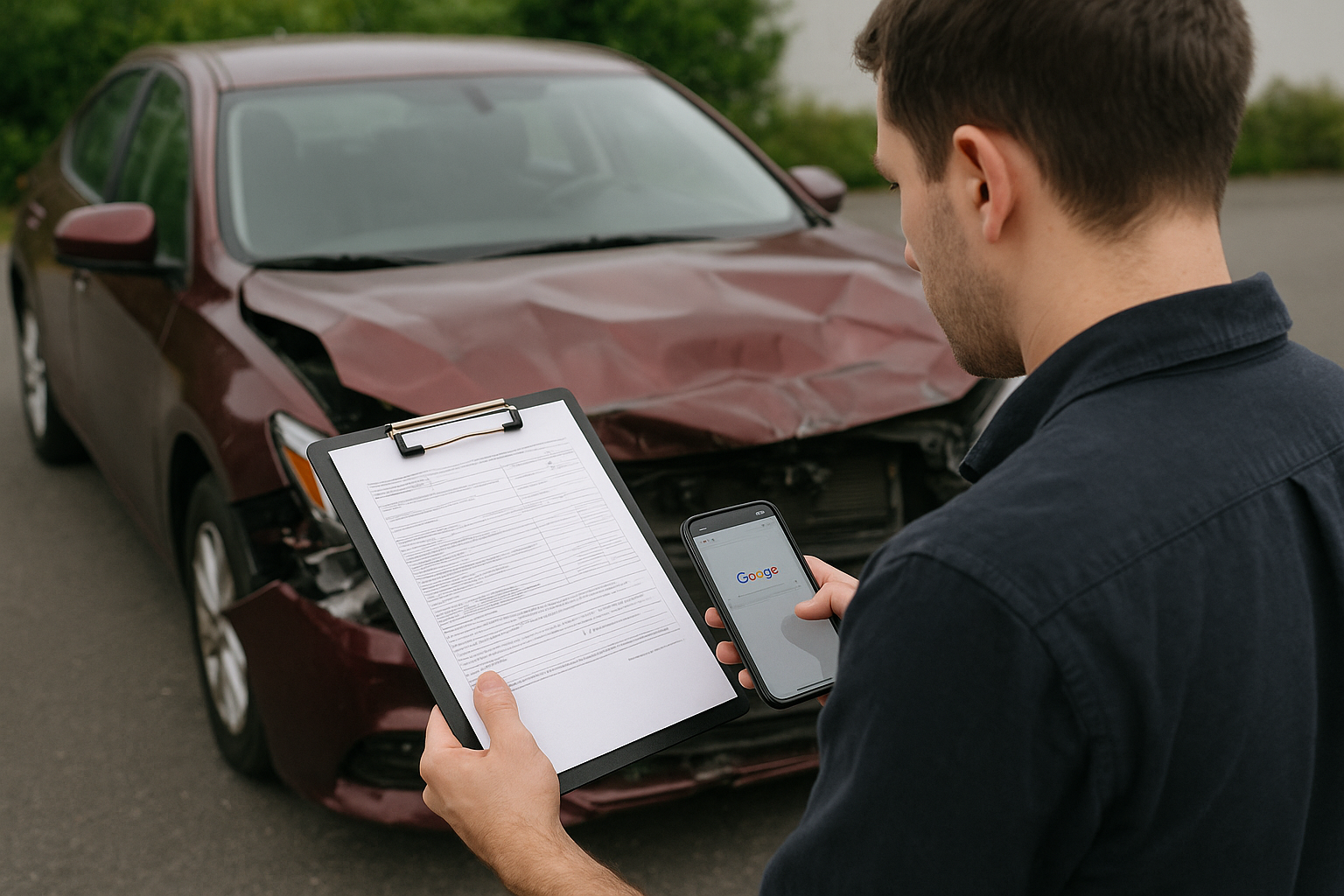
- Run a vehicle history report (Carfax/AutoCheck) and cross-check title status, mileage, and prior accidents.
- Inspect for flood signs: musty smells, silt under carpets, water lines in the trunk, corrosion on seat rails; look underneath for rust on brake and fuel lines.
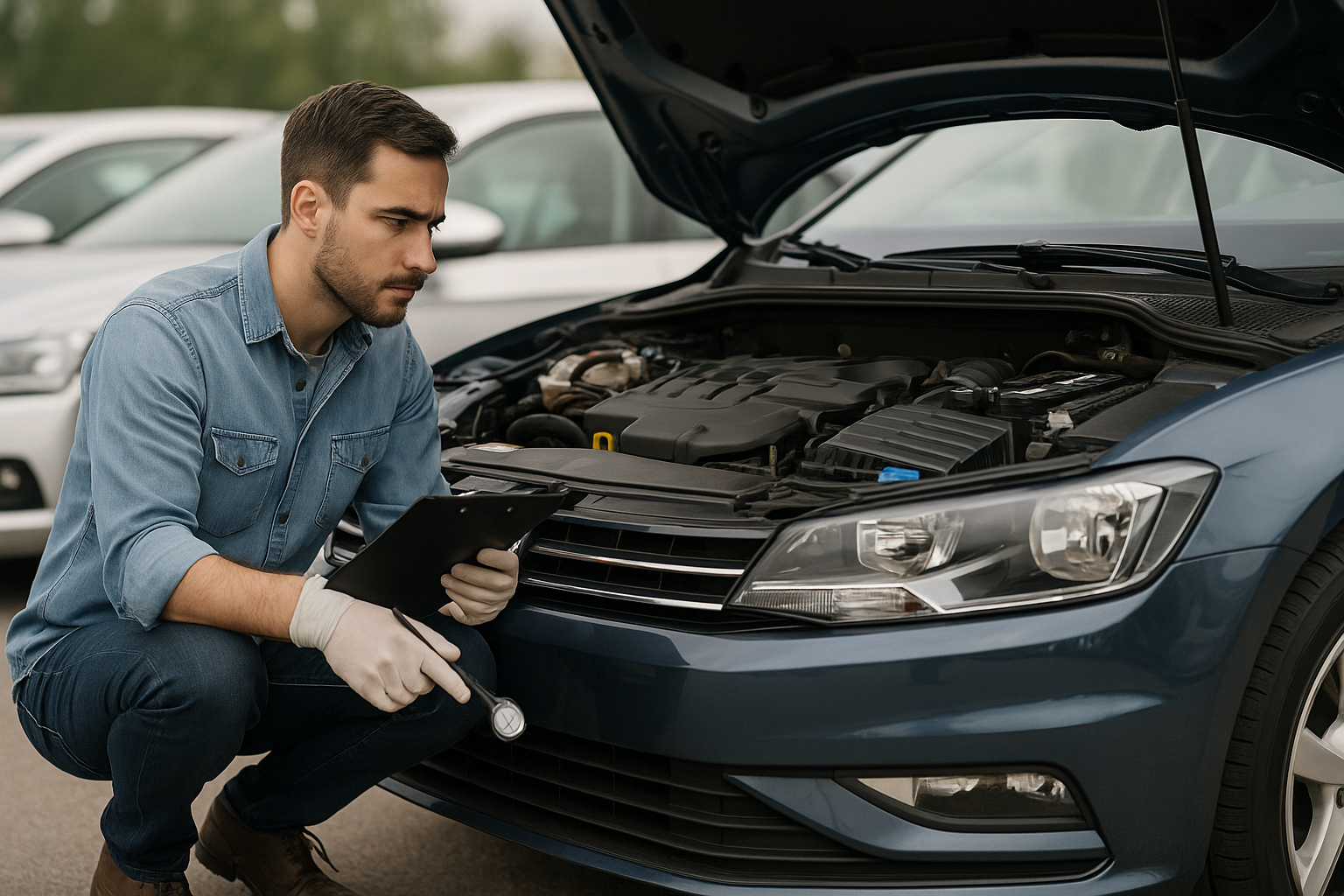
- Schedule a pre-purchase inspection with a trusted independent shop; ask for a compression test when applicable, a scan for trouble codes, and a full brake/suspension check.
- Check recall status by VIN at the NHTSA website and have any open recalls addressed.
- Verify service records, especially for timing belt/chain service, fluid changes, and transmission maintenance.
- Test all electronics and ADAS features; recalibrating sensors and replacing modules can be costly.
- Confirm that both keys, owner’s manuals, charging cables (for EVs), and accessories are included.
Where to shop and how to negotiate
Franchise dealers offer new, CPO, and late-model used cars with access to manufacturer financing and service. Independent dealers and online retailers can be competitive on price and inventory breadth. Private-party sales often yield the lowest prices but require more diligence and may limit financing options. Wherever you shop, get a preapproved loan from a bank or credit union to benchmark the dealership’s offer. Request itemized out-the-door quotes that include taxes and all fees, and be ready to walk if pricing or terms change at signing. Ask about doc fees (they’re capped or nonnegotiable in some states) and consider gap insurance if your down payment is small or if the model depreciates quickly.
A simple step-by-step plan
- Define your needs: passenger space, cargo, drivetrain, safety must-haves, and expected annual mileage.
- Set your budget using TCO and a guideline like 20/4/10.
- Research models for reliability, safety ratings (IIHS, NHTSA), and real-world fuel economy.
- Get preapproved financing; compare credit union, bank, and captive offers.
- Price compare across multiple dealers and marketplaces; use out-the-door quotes.
- Test-drive your top choices on highways and rough roads; verify driver-assistance behavior.
- For used, complete history checks and a pre-purchase inspection before you commit.
Putting it together
If you value predictability, intend to keep the vehicle a long time, and can secure low-rate financing or meaningful incentives, a new car can be worth the premium. If you want maximum value and are comfortable doing a bit of homework, a used or certified pre-owned car usually delivers the lowest total cost. Build a short list of models, run TCO scenarios for both new and used examples of the same vehicle, factor in insurance and financing, and let the math decide rather than the sticker.
Frequently Asked Questions
Is buying new ever cheaper than buying used?
Yes, in specific cases. If a new model offers a subsidized APR or lease, or if a new EV qualifies for a full federal or state incentive while the used equivalent does not, the new car’s total cost over your ownership period can be lower. Always compare out-the-door prices, interest, insurance, fuel or charging, maintenance, and expected resale to see which scenario wins.
How old is “too old” for a used car?
Age matters less than condition and maintenance. Many well-maintained cars from reliable brands can run 150,000–200,000 miles. That said, complex electronics and parts availability can complicate ownership beyond 10–12 years for some models. If you’re buying older than six to eight years, budget extra for wear items, inspect for rust in snow-belt vehicles, and be diligent with a pre-purchase inspection.
Should I buy certified pre-owned?
CPO is a good fit if you want warranty protection without paying for brand-new. You’ll pay a premium over non-CPO, but in return you get factory-backed coverage and roadside assistance. If the CPO car is well-priced relative to similar non-CPO cars plus the cost of an aftermarket warranty (and any deductible), it’s often worth it.
Do used cars always have higher interest rates?
Usually, but not always. Captive lenders tend to reserve their best rates for new cars. Credit unions sometimes narrow the gap for used loans, especially on late-model vehicles. Check multiple lenders; with excellent credit and a solid down payment, you may find competitive used-car APRs.
How much should I budget for maintenance on a used car?
Plan for routine items like oil changes, filters, tires, brakes, and fluids. A reasonable placeholder for a mainstream used car is $50–$100 per month averaged over a year, more for European luxury models and less for vehicles with low parts costs and simple drivetrains. Review the model’s maintenance schedule and ask what has been done.
What about buying out my lease—new or used?
A lease buyout can be a smart middle path if the buyout price is below current market value and you like the car’s condition. You already know the history, and financing a buyout is often straightforward. Compare the buyout’s TCO to current new and used listings of the same model before deciding, and include any disposition fees you’ll avoid by buying.
How do EVs change the new vs. used math?
EVs shift costs from fuel to electricity and maintenance is generally lower, but resale values can be more volatile. New EV incentives can heavily favor buying new; used EV credits can help at lower price points. For used EVs, battery health and remaining warranty are pivotal—get a state-of-health report, review charging habits, and factor potential degradation into your calculations.