
Quick Answer
When buying a used car from a private seller, start with the paperwork: verify the title, Vehicle Identification Number (VIN), lien status, and a vehicle history report. Then inspect the car’s physical and mechanical condition and take a thorough test drive. Scan for diagnostic trouble codes, look for signs of flood, crash, or rust damage, confirm maintenance records, check for open recalls and emissions readiness, and close the deal securely with a proper bill of sale, verified funds, and a title transfer that matches the seller’s ID.
Confirm the Paperwork Is Clean
Match the title, VIN, and seller’s identity
Ask to see the physical title before you spend time on a test drive. The seller’s legal name on the title must match their government-issued ID and the person meeting you. If the seller claims to be “selling for a friend” or the title isn’t in their name, walk away. Check for a lienholder printed on the title; if one exists, the seller must provide payoff documentation and a lien release once funds clear. Handle lien payoffs at the lender’s office whenever possible. In some states, titles are electronic—confirm the lender’s or DMV’s release process in writing.
Verify the VIN in multiple locations: the windshield plate (driver’s side), the driver’s door jamb sticker, under-hood label/stamp, and on service receipts or emissions reports. Every VIN must match the title exactly. Missing stickers, misaligned VIN plates, or scratched-off labels are red flags for theft, tampering, or a rebuilt car.
Run a vehicle history and recall check
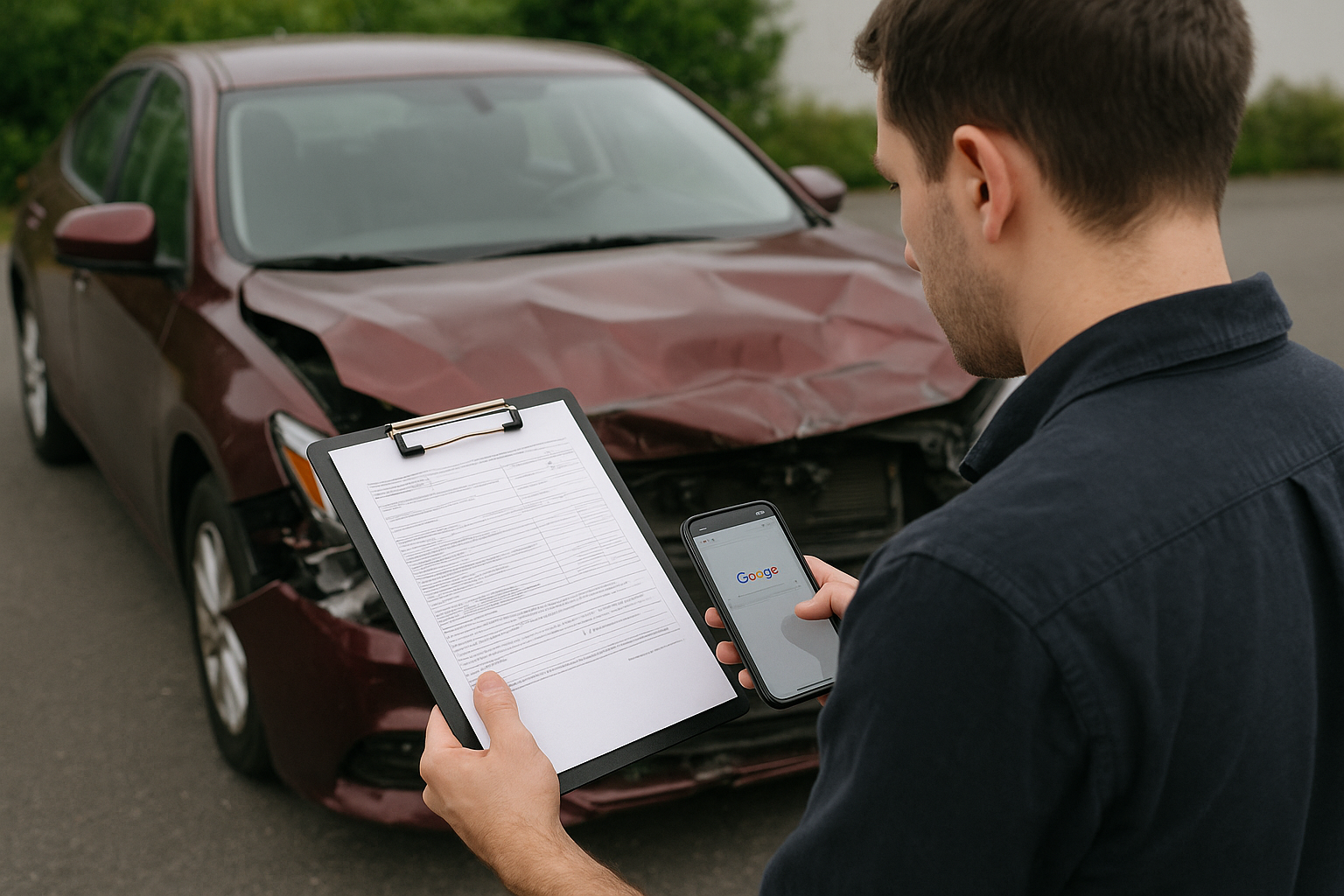
Order a history report (e.g., Carfax or AutoCheck) and check the National Motor Vehicle Title Information System (NMVTIS) for title brands and reported theft. Review mileage entries to catch odometer rollbacks—typical U.S. driving is roughly 12,000–15,000 miles per year. Look for accidents, flood branding, salvage or rebuilt titles, and repeated auction flips that suggest curbstoning (unlicensed dealers posing as private sellers). Then run the VIN through the NHTSA recall tool to confirm open safety recalls; most recall repairs are completed at franchised dealers at no cost to you.
Understand title brands before you buy
| Title/Brand | What it means | Risks/Considerations |
|---|---|---|
| Clean | No official brand; vehicle hasn’t been declared a total loss by an insurer | Still inspect carefully; a clean title doesn’t guarantee no prior damage |
| Salvage | Insurer declared a total loss | Potential structural/electrical issues; lower resale; tougher to insure/finance |
| Rebuilt/Reconstructed | Previously salvage; repaired and passed a state inspection | Repair quality varies; require a meticulous pre-purchase inspection |
| Flood/Water | Significant water intrusion documented | High risk of corrosion and long-term electrical failures |
| Lemon Buyback | Repurchased by manufacturer under a state lemon law | May have chronic issues; disclosure rules and labeling vary by state |
Document the sale properly
Prepare a bill of sale with buyer and seller names and addresses, VIN, year/make/model, mileage at sale, sale date, price, and a clear “as-is, no warranty” statement unless a written warranty applies. Some states require notarization, an odometer disclosure, or emissions/safety certificates. Complete the title assignment on the back (or electronic transfer), signed by both parties. Keep copies of IDs and documents, and file a release of liability immediately after the sale. Check your DMV’s checklist for taxes, fees, and deadlines.
Check for Flood, Crash, and Rust Damage
Exterior and structural clues
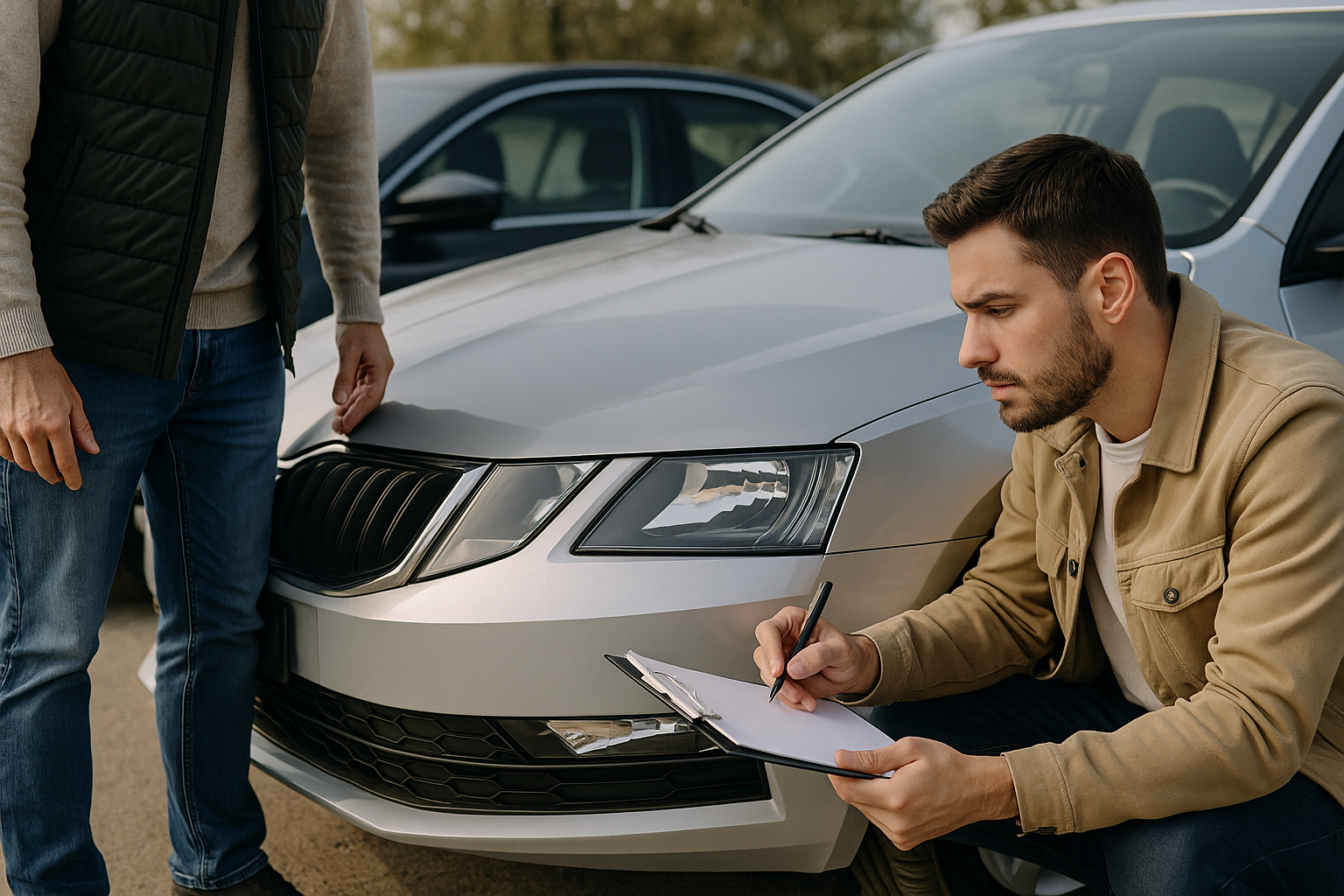
Inspect the car in bright, even light. Look for uneven panel gaps, misaligned headlights, hood, and trunk, overspray on trim and weatherstripping, or paint that doesn’t match adjacent panels. Fresh undercoating or newly painted frame rails can hide rust or collision repairs. Open all doors, the hood, and trunk; check for wavy seams, sloppy welds, drilled-out rivets, and non-factory fasteners indicating bodywork. At startup, confirm the airbag (SRS) warning light illuminates briefly and then goes out; a light that stays on—or never lights at all—signals an issue.
Flood indicators
Flood damage can be devastating and difficult to fully repair. Lift carpets and the trunk liner to check for moisture, silt, or water lines. Smell for mildew, and examine seat rails and under-dash metal for rust. Look in the spare tire well for standing water or corrosion. Uneven condensation inside headlights or taillights and green/white corrosion on wiring connectors are common clues. A recent auction sale from a flood-prone region combined with missing service history is a strong warning sign.
Rust: surface vs. structural
Light surface rust on exposed brackets is common. Scaling rust on frame rails, subframes, rocker panels, or suspension mounting points is serious. Jack points that crumble, holes in the floor, or heavily pitted brake and fuel lines are safety issues. Rust around windshield frames can cause leaks and expensive repairs. If unsure, have a trusted mechanic examine the undercarriage on a lift.
Evaluate the Mechanical Condition
Cold start and idle
Ask the seller to leave the car cold for your visit. A healthy engine starts promptly without excessive cranking, idles steadily, and emits no smoke beyond brief condensation. Blue smoke suggests oil burning; persistent white smoke after warm-up hints at coolant intrusion; black smoke indicates a rich fuel mixture. Watch for warning lights on startup and verify they extinguish quickly.
Fluids tell the truth
| Fluid | Normal appearance | Warning signs | What it may indicate |
|---|---|---|---|
| Engine oil | Amber to dark brown, smooth | Milky/tan, metal flakes, burnt odor | Coolant contamination, internal wear, overdue changes |
| Coolant | Green/orange/pink, clear, no oily sheen | Rusty sludge, oil film, low level | Poor maintenance, oil cooler/head gasket issues, leaks |
| Transmission (automatic) | Red/pink, clear, slightly sweet | Brown/black, burnt smell, metal shavings | Overheating, internal wear, long service intervals |
| Brake fluid | Clear to light yellow | Dark/brown, low level | Moisture contamination, pad wear, leaks |
| Power steering | Amber/red, clear | Foamy, dark, low level | Air in system, pump wear, leaks |
After the test drive, look for leaks. Fresh oil around the valve cover, oil pan, transmission pan, differential, or axle seals suggests needed repairs. White crust near hoses or the water pump points to coolant leaks. Inspect belts and hoses for cracks, bulges, or glazing. Check battery date stickers (typical life is 3–5 years). With the engine running, charging voltage at the battery should be roughly 13.7–14.7 volts.
Use an OBD-II scanner
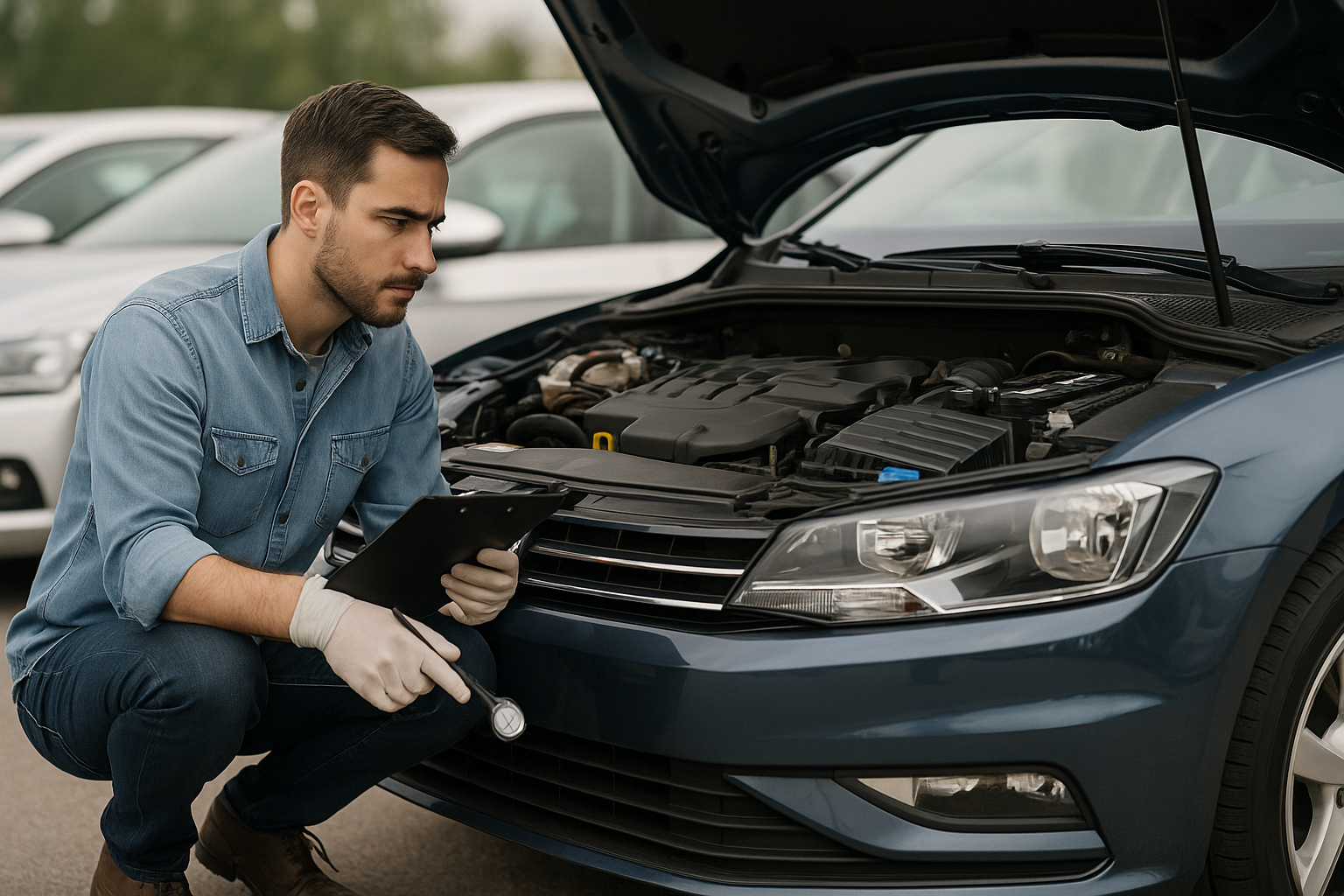
Bring a basic OBD-II scanner. Read stored and pending trouble codes and confirm emissions “readiness monitors” are set to ready. Recently cleared codes or multiple monitors “not ready” after a long drive can indicate a reset to mask a check engine light. If available, scan ABS, airbag, and transmission modules for additional faults.
Test Drive the Right Way
Plan a varied route
Drive at neighborhood speeds, on highways, and up a hill if possible. Before moving, turn the steering wheel lock-to-lock while stationary and listen for groans or clunks. On the road, the car should track straight with a light grip on the wheel; a persistent pull can mean alignment, tire, or brake issues.
Transmission and drivetrain checks
Automatics should upshift and downshift smoothly without flare (RPM rise without acceleration) or harsh bangs. Manuals should have a consistent clutch bite point with no slip under hard acceleration in higher gears; grinding suggests worn synchros. For AWD/4WD, make tight circles in a parking lot and feel for binding that points to mismatched tires or differential problems. Listen for a speed-dependent humming (wheel bearings) and clunks during on/off throttle (mounts or driveline play).
Brakes, suspension, and steering
Brake firmly from 40–60 mph; the vehicle should stop straight without vibration. Pulsation suggests warped rotors; squeal or grinding can mean worn pads. Over bumps, rattles and clunks point to worn end links, control arm bushings, or struts. Perform a bounce test at each corner; the car should settle quickly. Excess play in the steering wheel indicates worn tie rods or a failing steering rack.
HVAC and electronics
Test every button and feature: windows, locks, mirrors, seats, infotainment, Bluetooth, backup camera, sunroof, heated/cooled seats, and key fobs. Confirm the A/C blows cold and the heater blows hot. Verify all exterior lights and wipers work. Check the tire pressure monitoring system (TPMS) and that all safety aids (if equipped) initialize without faults.
Tires, Brakes, and the Undercarriage
Tires and wheels
Measure tread depth; the legal minimum in most states is 2/32 inch, but plan to replace at 4/32 for wet traction. Use the DOT code to find tire age; replace tires older than six years regardless of tread. Uneven wear (cupping or inner/outer edge wear) often points to alignment, suspension, or pressure issues. Matching brand, model, and size across all four corners is ideal—essential for AWD systems to prevent drivetrain damage.
Brake components
Look through the wheel spokes (or remove a wheel) to check pad thickness and rotor condition. Deep grooves or a pronounced lip on the rotor edge imply wear. Verify the parking brake holds on a hill. A soft or sinking pedal can indicate air in the lines, moisture-saturated fluid, or a failing master cylinder.
Underbody inspection
With a flashlight, check for fresh oil or coolant, wet differential housings, torn CV axle boots slinging grease, and exhaust leaks or loose hangers. Confirm catalytic converters are present—rough torch cuts and a loud exhaust note suggest theft. Inspect subframes and jack points for rust and signs of prior accident repairs.
Confirm Recalls, Emissions, and Local Requirements
Use the VIN on NHTSA’s website to check open safety recalls and schedule dealer repairs if needed. In emissions-testing states, verify the car will pass before you buy; an illuminated check engine light or unset readiness monitors may cause an immediate failure. Some states require the seller to provide a passing emissions or safety inspection, while others put the burden on the buyer. Review your DMV’s rules for emissions, title transfer deadlines, taxes, and temporary permits so you can drive legally after purchase.
Pricing, Negotiation, and Red Flags
Know the market value
Price the car using multiple sources—Kelley Blue Book, Edmunds, CarGurus—and local listings for the same year, trim, mileage, and condition. Adjust for options (premium packages, driver assists, AWD), maintenance (new tires or timing belt), accident history, and number of keys. Seasonality matters: convertibles command more in spring; 4WD pickups spike before winter. Bring printouts or saved comps to support your offer.
Questions to ask the seller
- How long have you owned the car, and why are you selling?
- Do you have maintenance records and the original window sticker or build sheet?
- Any accidents, paintwork, or major repairs?
- Any current issues, warning lights, leaks, or unusual noises?
- Are there any liens? Do you have both keys, manuals, and accessory items?
Negotiation tips
Lead with condition, not just price. Point out specific items you’ll need to address—tires at 3/32, brakes near end of life, a leaking strut, overdue timing belt—and quantify them with estimates. Make a fair, firm offer based on your research and be willing to walk away. Cash doesn’t automatically buy a discount; a simple, quick transaction with verified funds often does.
Walk-away red flags
- Title and VIN inconsistencies or refusal to show the title
- “Just cleared the codes” or readiness monitors not set after a long drive
- Fresh undercoating or new carpet in an older car without explanation
- Multiple similar cars listed by the same “private” seller (curbstoning)
- Pressure to rush, meet at odd hours, or use unusual payment methods
- Price far below market with a vague or inconsistent backstory
Safety and Payment
Meet smart and stay insured
Meet during daylight at a bank, DMV, or a police-designated safe exchange area. Bring a friend. Ask the seller to ride along on the test drive and confirm that insurance coverage is in place; many insurers extend limited coverage to policyholders for test drives—call yours first. Check that the registration is current and the plates are valid for a test drive in your state.
Secure payment methods
For clean-title cars without liens, complete the transaction at the seller’s bank. Use a cashier’s check drawn at your bank and have the teller verify it with the seller, or execute a bank-to-bank wire while you both wait for confirmation. Avoid gift cards, cryptocurrency, and peer-to-peer app transfers without robust buyer protection. For cars with an active lien, meet at the lienholder’s branch, pay them directly, obtain a lien release, and follow their process to receive the title. For high-value or long-distance deals, consider a reputable escrow service.
Sign correctly
Sign the title and bill of sale together, ensuring names, VIN, mileage, and sale price are accurate and legible with no cross-outs. Some states require notarization—bring IDs and use a notary when needed. Photograph all documents and exchange copies. As the buyer, file title transfer and pay taxes promptly to avoid penalties; as the seller, file a release of liability immediately.
Close the Deal: After-Purchase Steps
Before leaving, collect both keys/fobs, manuals, service records, the wheel lock key, spare tire/tools, cargo covers, and any accessories that belong with the car. Call your insurer to activate coverage immediately. If you need temporary tags, visit your DMV or an authorized tag office with the signed title, bill of sale, and proof of insurance. Once home, baseline the car: change engine oil and filter, cabin and engine air filters, wiper blades, and brake fluid if dark; consider transmission fluid and coolant if the service history is thin. If the engine uses a timing belt and it’s due, schedule the belt and water pump. Reprogram or replace key fobs if needed, and address small issues early to prevent bigger ones.
Consider a Pre-Purchase Inspection (PPI)
An independent pre-purchase inspection is often the best money you’ll spend on a used car. A competent shop will put the vehicle on a lift, measure brake and tire life, check for leaks, scan all modules for codes, and evaluate accident and rust repairs. Expect to pay $150–$300 at a general shop; marque specialists may charge more. Mobile inspections can be convenient—ensure they include a road test and full-system scan. Make any deposit contingent on a satisfactory PPI so you can withdraw if serious issues are found.
Frequently Asked Questions
Should I buy a used car without a title?
No. A missing title can signal theft, outstanding liens, or administrative hurdles that may leave you with a car you can’t register. The seller should obtain a replacement title before you proceed.
How can I tell if the odometer has been rolled back?
Compare mileage on the title, history report entries, service invoices, and emissions tests. Look for wear on pedals, seat bolsters, and the steering wheel that doesn’t match the displayed miles. Digital odometers can be altered; mismatched records are the giveaway.
Is a salvage or rebuilt title always a bad idea?
Not always, but risk is higher. Insurance can be costly or unavailable, resale value drops, and hidden structural or electrical issues are common. If you proceed, pay well below clean-title value and insist on a meticulous inspection with frame measurements.
What’s the safest way to pay a private seller?
Meet at the seller’s bank and use a cashier’s check verified on the spot or a bank-to-bank wire confirmed by both parties before handing over the keys and title. Avoid gift cards, crypto, and unprotected app transfers.
Do I still need a PPI if the car has a clean history report?
Yes. History reports miss plenty—poor repairs, developing mechanical failures, and unreported incidents. A PPI can uncover leaks, worn components, and diagnostic data a report won’t show.
Can I test drive a car with expired registration or plates?
It depends on your state. Some allow test drives on private roads or with temporary permits; others require valid plates and insurance. Verify local laws and your insurance coverage before driving.
What documents do I need to register the car after purchase?
Typically: the signed title, bill of sale, odometer disclosure (if required), proof of insurance, any required emissions or safety certificate, and payment for taxes and fees. Check your DMV’s website for state-specific requirements and deadlines.