
Quick Answer
Yes, you can sometimes buy a car with a debit card, but it depends on the seller and the amount. Many dealerships allow debit cards for deposits or a portion of the price, and some will accept a full payment if you coordinate with your bank to raise limits. Private sellers typically cannot process debit cards and will prefer a cashier’s check or wire. Even when allowed, debit has limits, fees, and protection trade-offs to consider.
How Car Dealers Treat Debit Cards
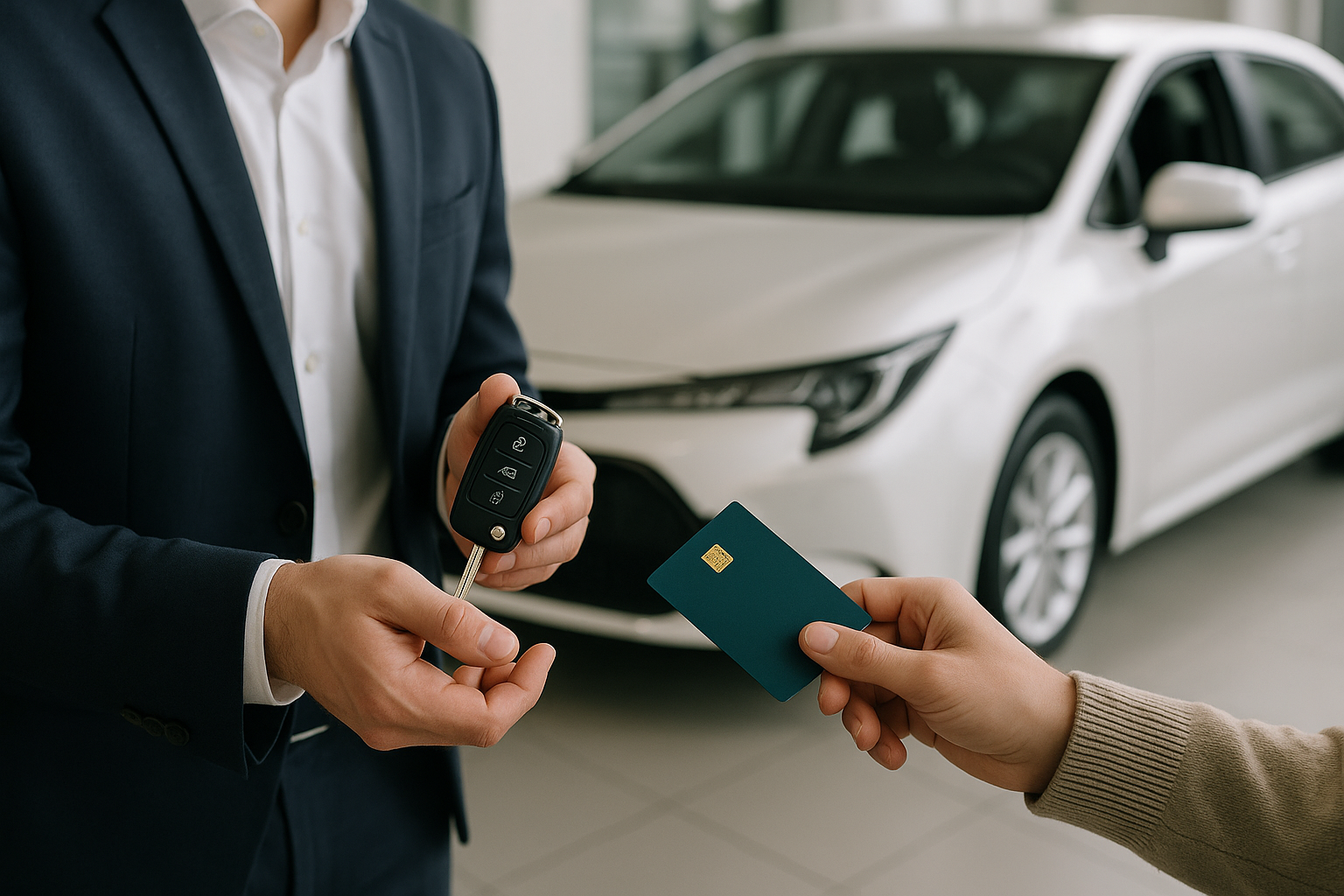
Dealership policies vary widely. Some stores accept a debit card for only a small deposit (for example, $500–$2,000). Others will allow a larger partial payment (say $5,000–$15,000) and ask for the rest via cashier’s check or wire. A minority will accept a full purchase on a debit card, provided you clear fraud checks and raise your point-of-sale limit in advance. The more expensive the car, the more likely a dealer will prefer low-fee, irreversible methods like a wire transfer or a cashier’s check.
Why the hesitation? Large debit transactions can trigger chargeback risk for the dealer, and card processing still carries fees and fraud exposure. Dealers also spend considerable time on titling and registration; they don’t want to unwind a sale because of a dispute. For that reason, they often cap how much they will take on any card, debit included.
How Debit Card Processing Works for Big Purchases
PIN debit vs. signature debit
Most debit cards can be processed as PIN debit (you enter your PIN) or “run as credit” signature debit. PIN debit routes over debit networks and typically carries lower interchange fees and real-time authorization, which dealers prefer. Signature debit routes over credit networks and can behave more like a credit transaction for dispute handling, but your bank balance is still used immediately.
Bank authorization and spending limits
Banks set per-transaction and daily point-of-sale limits on debit cards, often between $2,000 and $10,000 by default. You can usually raise these temporarily by calling your bank before the purchase. Expect your bank’s fraud team to verify the transaction and merchant. If you skip this step, a high-dollar swipe can be declined, even if you have funds.
Holds and refunds
When a dealer runs your card, your bank places an immediate hold for the authorized amount. If the dealer reverses or adjusts it (for example, after a paperwork change), the release can take several days, sometimes a week or more depending on the bank and timing. That can tie up your funds longer than expected, which matters if you’re juggling insurance, taxes, or registration fees.
Pros and Cons of Buying a Car With a Debit Card
Advantages
- No interest charges or loan origination fees.
- Immediate payment with no lien from a lender when you pay in full.
- Simpler paperwork than a loan; you skip financing disclosures.
Drawbacks
- Weaker dispute rights than credit cards for product or service issues. Unauthorized debit transactions are protected, but defects or “buyer’s remorse” are harder to resolve.
- Spending limits and fraud blocks can derail the transaction without advance planning.
- Some dealers add processing fees on card transactions. Card network rules prohibit surcharges on debit, but you may still encounter fees described as “non-cash” or “convenience” charges.
- Ties up your cash cushion; you lose liquidity for emergencies.
- Doesn’t build credit history. A well-managed auto loan can.
How to Pay With a Debit Card Successfully
- Confirm acceptance and limits before you visit. Ask the dealer:
- Do you accept debit for the deposit? For the full balance?
- Is there a maximum dollar amount on debit?
- Are there any fees for using a debit card?
- Do you require PIN debit, or is signature debit okay?
- Get the out-the-door number in writing. That includes the vehicle price, doc fees, sales tax, title, registration, and any add-ons. The exact total is what your bank needs to approve a limit increase.
- Call your bank 24–48 hours ahead. Request a temporary increase to your card’s purchase limit and let them know when and where you’ll run the card. Ask about any per-swipe and daily caps, and confirm how long the higher limit remains active.
- Bring a backup payment method. If the card declines or the dealer changes policy, you can pivot to a cashier’s check or wire without losing the car.
- Use PIN debit if available. It’s more likely to clear quickly and may be cheaper for the dealer, which keeps negotiations cleaner.
- Get receipts and finalize title details. Ensure the bill of sale, odometer disclosure, and title/registration paperwork reflect payment in full. Keep copies in case of administrative errors.
Fees, Surcharges, and “Cash Discounts”
Dealers commonly prefer “cash-equivalent” methods (wire, cashier’s check) and may offer a small discount when you use them. Conversely, some dealers add a convenience fee for card payments. Under network rules, merchants in the U.S. generally cannot surcharge debit card transactions, even if run “as credit.” They can surcharge credit cards in many states if disclosure rules are met, though a few states restrict or cap surcharges. Policies change, so clarify fees beforehand and get them in the buyer’s order.
If a dealer attempts to add a “debit surcharge,” you can point out the network prohibition. In practice, some merchants frame it as a “non-cash price.” You can either request the cash-equivalent price or switch to a no-fee method like a cashier’s check or wire.
Consumer Protections: Debit vs. Credit
Debit cards fall under Regulation E for unauthorized electronic transfers. If someone steals your card and makes purchases, you’re protected when you report promptly. But if the vehicle is misrepresented, defective, or the dealer fails to deliver tag-and-title work on time, your leverage with a debit payment is limited. Your cash is already gone, and bank disputes may move slowly.
Credit cards, by contrast, come with the Fair Credit Billing Act, which permits disputes for undelivered or misrepresented goods and services and gives you the ability to withhold payment during investigation. Many dealers won’t allow a full car purchase on credit because of these protections and the higher fees, but a modest deposit on a credit card can add a layer of recourse if something goes wrong before delivery.
Dealer, Private Seller, and Online Scenarios
Franchise and independent dealers
Expect one of these approaches:
- Deposit on debit ($500–$2,000), balance by cashier’s check or wire.
- Partial debit (for example, up to $5,000–$15,000), remainder by bank instrument.
- Full debit acceptance after bank pre-approval of your limit, often with PIN.
If the dealer offers in-house financing, paying entirely with debit can remove a profit center (financing reserve and product add-ons). Some stores are less flexible on price if you don’t finance. Focus negotiation on the out-the-door price first; discuss payment method after you have a signed buyer’s order.
Private-party sales
A private seller can’t ordinarily accept a debit card unless they have a merchant account and card reader, which most individuals do not. Safer options include a cashier’s check, a bank-to-bank wire, or meeting at the buyer’s bank to verify funds and issue a check. For very large sums, wires are common. Avoid handing over a vehicle for app-based payments with weak buyer/seller protections or reversible transfers.
Online car retailers and auctions
Large e-commerce car sellers usually take ACH, wire, or financing; debit cards are often limited to deposits. Online auction platforms vary: some hold funds in escrow-like arrangements and release to the seller after delivery milestones. Read their payment and dispute policies closely before sending money.
Alternatives to a Debit Card
| Method | Dealer Acceptance | Speed/Settlement | Buyer Cost | Protections/Notes |
|---|---|---|---|---|
| Debit card (PIN) | Deposit to full amount, policy-dependent | Immediate authorization | Usually $0 to buyer; dealer pays fees | Strong fraud protection; weaker recourse for disputes over quality |
| Debit card (signature) | Often allowed; may carry limits | Near-immediate; may behave like credit rails | Usually $0 to buyer; dealer fees higher than PIN debit | Funds leave checking; chargeback options exist but can be slow |
| Cashier’s check | Widely accepted | As soon as verified/deposited | Bank fee typically $5–$15 | Safer than personal checks; confirm authenticity to avoid scams |
| Wire transfer | Widely accepted | Same day (domestic) | $15–$35 outgoing fee typical | Hard to reverse; verify recipient details carefully |
| ACH transfer | Some online retailers | 1–3 business days | Usually low or no fee | May delay delivery until cleared |
| Credit card | Common for deposits; rare for full payment | Immediate authorization | May incur a surcharge; interest if not paid in full | Stronger dispute rights; some dealers cap amount |
| Financing (auto loan) | Very common | Same day approval possible | Interest and fees vary | Builds credit; creates a lien until paid |
Tax and Reporting Notes
Businesses must file IRS Form 8300 when they receive cash payments over $10,000 in one or related transactions. Debit and credit card payments are not treated as “cash” for this rule. A dealer may still ask for ID and documentation for anti-fraud reasons, but a large debit card sale does not trigger Form 8300 reporting by itself.
Safety Tips for Large Debit Purchases
- Coordinate with your bank. Tell them the exact merchant, date, and amount. Confirm any foreign transaction fees if the seller is outside the U.S.
- Verify the seller. Check the dealer’s license, physical address, and online reputation. For private sales, meet at a bank branch and verify the title status before money changes hands.
- Inspect and test drive. Use a pre-purchase inspection on used cars. Paying with debit reduces leverage after the fact.
- Get everything in writing. Final buyer’s order, any “we owe” items, and a clear return or cancellation policy if applicable.
- Avoid overdraws. Leave a buffer in your checking account for insurance, registration, or unexpected fees so your payment doesn’t trigger overdrafts.
When a Debit Card Makes Sense—and When It Doesn’t
Using a debit card can be practical if the dealer accepts it, your bank can raise limits, and you want to avoid financing charges. It’s a clean way to finish a straightforward purchase when you’ve already inspected the car, reviewed the title work, and locked in the out-the-door price. If you’re still uncertain about the vehicle’s condition or the seller’s reliability, a deposit on a credit card (with clear, refundable terms) plus a cashier’s check or wire for the balance offers better protection and fewer delays.
Practical Step-by-Step Example
Suppose your out-the-door price is $21,450. Your bank’s daily purchase limit is $7,500. Here’s a workable plan:
- Call the dealer: confirm they accept debit up to $15,000 and the rest by cashier’s check without fees.
- Call your bank: request a one-day POS limit increase to $15,000 for a purchase at “ABC Toyota” on Friday.
- Ask the dealer to email the buyer’s order showing $21,450 total.
- On pickup day, pay $15,000 by PIN debit and the remaining $6,450 by cashier’s check obtained at your bank on the way in.
- Collect your paid receipt, temp tag, and title paperwork before leaving.
Common Pitfalls to Avoid
- Not asking about fees until the finance office. Clarify any convenience fees or “non-cash” pricing before you negotiate the vehicle price.
- Relying on mobile payment apps funded by debit for private sales. Limits, reversals, and scams are common. Wires or cashier’s checks are safer.
- Assuming signature debit is treated like credit for disputes. Your checking funds are at risk until the bank finishes its investigation.
- Forgetting insurance and taxes. Budget for sales tax, title, registration, and insurance binders so a debit hold doesn’t leave you short.
Frequently Asked Questions
What’s the maximum a dealership will let me put on a debit card?
There’s no universal cap. Some cap debit at $2,000–$5,000, others allow $10,000–$15,000, and a few will accept the full amount. The limit is a dealership policy decision layered on top of your bank’s per-day and per-transaction limits. Ask the dealer and your bank before you go.
Can a dealer charge a fee for using a debit card?
Card network rules prohibit surcharges on debit transactions, even when run “as credit.” However, some dealers set a “non-cash” price that applies to all card payments. If you encounter a debit-specific surcharge, you can request the cash-equivalent price or switch to a cashier’s check or wire. State laws also regulate surcharge disclosures and, in some places, restrict credit-card surcharges.
How do I raise my debit card limit for a car purchase?
Call the number on the back of your card and request a temporary point-of-sale limit increase for a specific date and merchant. Be ready to verify the transaction amount and location and to pass a security check. Some banks let you adjust limits in their app; others require speaking to a representative.
Are prepaid or gift debit cards a good way to buy a car?
No. Prepaid and gift cards often have low spend limits, high fees, fraud red flags, and weak buyer protections. Most dealers won’t accept them for large purchases. Use a bank debit card linked to your checking account, a cashier’s check, or a wire instead.
Does paying with a debit card affect taxes or reporting?
Paying with a debit card doesn’t trigger IRS Form 8300, which applies to cash payments over $10,000. The dealer still collects and remits sales tax and handles title and registration as usual. Keep your receipts and buyer’s order for your records.
Can I split payment between debit and another method?
Often yes. A common approach is to put a portion on debit (within the dealer’s cap and your bank’s limit) and pay the remainder by cashier’s check or wire. Confirm the split and any fees before you arrive.
Will paying with a debit card help my credit score?
No. Debit transactions don’t appear on your credit reports. If you want to build credit, consider an auto loan with affordable terms and no prepayment penalty, then pay on time or early.