
Quick Answer
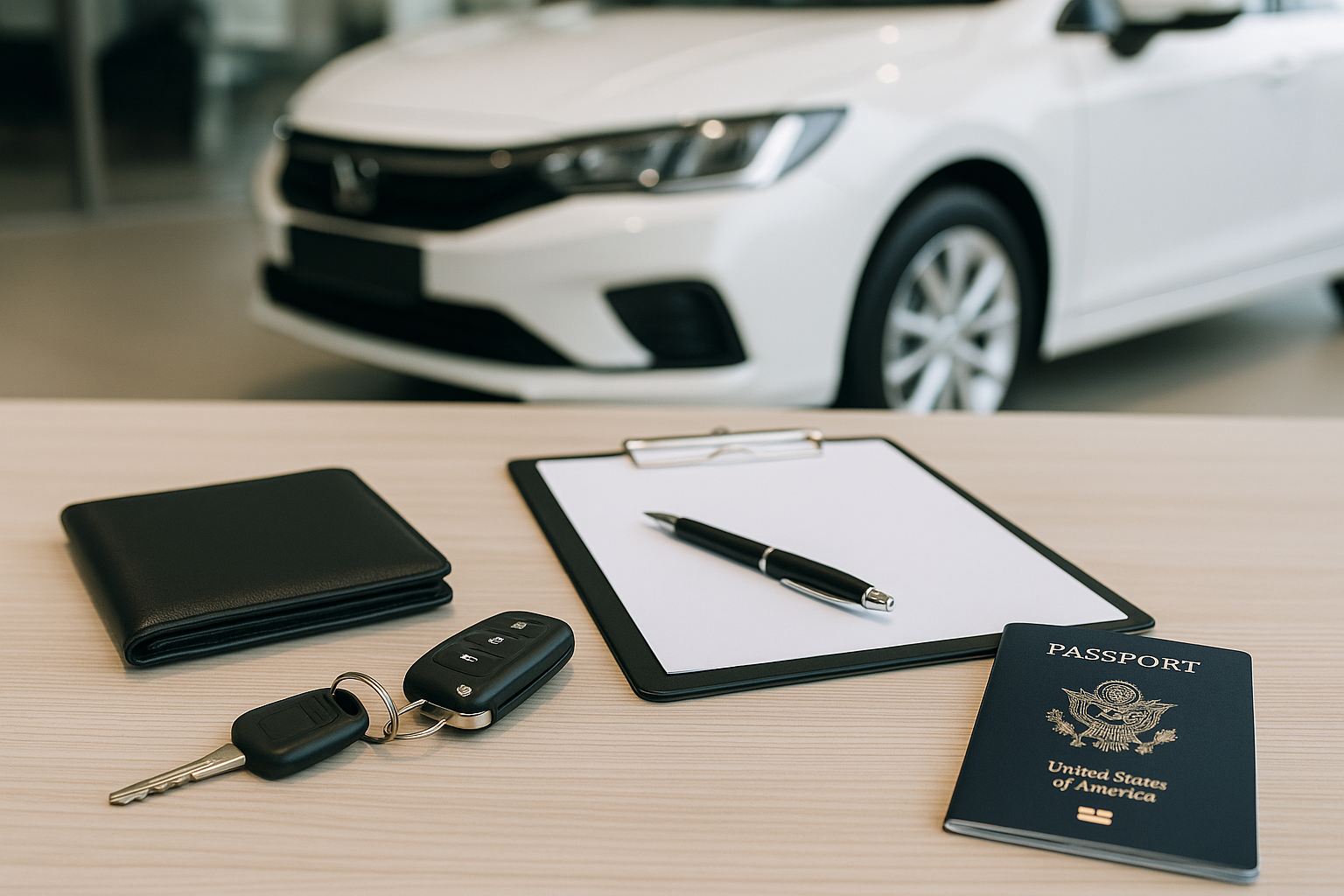
Bring a valid driver’s license, proof of insurance (or your insurer’s contact to bind coverage), a way to pay your down payment, and all documents tied to financing and any trade-in. That typically means recent pay stubs and proof of address if you’re financing; your current registration, title (or a 10-day payoff letter), all keys, and service records if you’re trading in. Also bring your preapproval letter or rate quote, any discount eligibility proof, and a charged phone, checkbook, and credit/debit card.
The core documents most dealerships will ask for
Dealers must verify identity, register and title the vehicle, collect taxes and fees, and finalize any loan. Arrive with the following and you can usually sign and drive the same day:
- Driver’s license: Must be valid and match the name on all paperwork. If there’s a co-buyer or cosigner, they need to be present with ID, too.
- Proof of insurance: Either an active policy that automatically covers a new purchase or your insurer’s contact so coverage can be bound before delivery.
- Payment method: For the down payment and fees—checkbook, debit card, or a cashier’s check. If paying a large balance, ask about card limits and wire instructions.
- Trade-in documents (if applicable): Current registration, title (or lienholder details), spare keys, service records, and a 10-day payoff letter if there’s an outstanding loan.
- Preapproval letter or financing documents: If you’ve arranged financing, bring the approval with rate and term. If you plan to finance at the dealership, have income and residency documents ready.
Financing at the dealership: what to bring for fast approval
Dealers submit your application to lenders, which often require a standard set of documents. Having them on hand prevents delays and last-minute stipulations.
- Proof of income: Two recent pay stubs dated within 30 days. Self-employed buyers should bring 2–3 months of bank statements, recent 1099s, or a prior-year tax return. Current benefit award letters (Social Security, disability) may also qualify.
- Proof of residence: A utility bill, lease, mortgage statement, or bank statement with your name and current address dated within the past 30–60 days.
- References: Some subprime lenders ask for 3–5 references with names, phone numbers, and addresses (not living at your address).
- Down payment: Know the exact amount you can place the same day and bring the method to fund it.
- Identification: Occasionally, a lender will ask for a second ID (passport or birth certificate), especially if your credit profile is thin or frozen.
- Credit freeze PINs: If your credit is frozen, bring your login or PIN so you can lift it on-site.
If you have a trade-in: paperwork and items that protect your value
A trade-in adds moving parts to your deal. These items help the appraisal go smoothly and preserve your vehicle’s value:
- Title: If the vehicle is paid off, bring the original title. If you recently paid off a loan, include the lien release. Names on the title must match the people signing at the dealership.
- Registration: Current registration proves ownership and may be required for taxes and transfer.
- Loan payoff details: Bring your lender’s name, account number, and a 10-day payoff letter with per-diem interest. The dealer needs this to pay off the lien.
- All keys and key fobs: Missing keys can reduce trade value by hundreds of dollars.
- Service records: Maintenance receipts support condition and can increase appraisal confidence.
- Spare accessories: Floor mats, cargo covers, roof rack tools, charging cables for EVs—bring everything that came with the car.
- Plan for negative equity: If you owe more than the car is worth, decide how much you’ll cover in cash to avoid inflating the new loan.
Paying with cash, cashier’s check, or wire transfer
Dealerships accept several forms of payment, but each has its own rules and timing.
- Cashier’s check: Widely accepted. Call ahead to confirm the payee and the total including taxes and fees. Some stores verify funds by calling the issuing bank, which can add time.
- Wire transfer: Fast, secure, and common for larger amounts. Request wiring instructions from the dealer’s accounting office; send early in the day to ensure same-day confirmation.
- Personal check: Many dealers restrict or decline them for large balances. If accepted, limits vary—call first.
- Large cash payments: For cash over $10,000, the dealer must file IRS Form 8300. Bring ID and be prepared for extra paperwork. For safety, avoid carrying large sums; use a wire or cashier’s check instead.
Down payment methods and card limits
Processing networks and store policies cap how much you can put on a card. Typical patterns:
- Debit cards: Often allowed for larger amounts, but your bank may have daily limits. Call your bank to raise the limit before visiting.
- Credit cards: Many dealers cap credit card payments at $2,000–$5,000 due to processing fees. Confirm the limit if you plan to earn rewards.
- ACH or EFT: Some stores can pull funds directly from your account with an authorization form; processing can take 1–3 business days.
Regardless of method, bring a backup—checkbook or an alternate card—so a limit doesn’t stall delivery.
Insurance: binding coverage the same day
Most states require proof of insurance before you take delivery. If your current policy already covers new vehicles, bring your insurance card and policy number. If not, you can usually:
- Call your agent from the dealership to add the new vehicle by VIN and request a digital insurance card or binder.
- Use your insurer’s app to add coverage on the spot.
- Ask the finance office to fax or email your insurer; some carriers require your verbal authorization.
Have your agent’s contact, your policy number, and your login credentials handy. If you’re buying on a weekend, confirm your insurer’s hours.
Preapproved? Bring these to protect your rate
A preapproval helps you compare the dealer’s offer and keep numbers honest. Bring:
- The preapproval letter with lender name, rate, term, maximum amount, and expiration date.
- Any listed stipulations (e.g., proof of income or residency), plus your loan application reference number.
- Direct contact info for the lender or credit union. Many credit unions fund via draft check; bring the draft if issued.
Use your preapproval to benchmark monthly payment and APR, and don’t sign if the final terms don’t match.
Registration, taxes, and who needs to be present
To register and title the vehicle correctly, dealers need accurate personal details and signatures from all owners. Plan for:
- All buyers present: Every person listed on the title or loan must sign. If someone can’t attend, ask about a limited power of attorney in advance.
- Correct address: Bring proof to avoid errors on your registration and title. If you moved recently, update your license if your state requires it for titling.
- Sales tax and fees: Expect state sales tax, title and registration fees, a documentation fee, and sometimes emissions or smog fees. Payment is typically due at signing.
- Temporary tags: If plates will be mailed later, bring your current plate information (for transfers) and ensure you receive a temp tag and proof of registration.
Out-of-state purchases
Buying in a different state than your residence adds a few steps. Bring extra documentation and confirm how taxes and registration will be handled:
- Proof of residence for your home state: Lenders and DMVs use it for tax and registration.
- Insurance binder valid in your home state.
- Emissions/inspection requirements: Check whether your home state requires a specific test after you bring the car back.
- Tax handling: Some dealers collect your home-state tax; others issue a temp permit and you pay tax when registering at home. Ask the title office in advance.
Discounts, rebates, and membership programs: bring proof
Many incentives require documentation at signing. If you plan to claim any of the following, bring proof of eligibility:
- Recent grad or student offers: Diploma, transcript, or enrollment verification (often within the last 24 months).
- Military or first responder programs: Military ID, DD-214, LES, or department ID as applicable.
- Employer or partner pricing: Work badge, pay stub, or program code (e.g., supplier or affiliate numbers).
- Warehouse club or buying service certificates: Membership card and the unique authorization or deal certificate.
- Loyalty or conquest rebates: Registration of a qualifying vehicle in the household; bring the registration or insurance card.
Tech and practical items that make the visit smoother
Beyond paperwork, a few practical items can save time and help you make a confident decision:
- Charged phone and charger: For banking, insurance apps, and photographing documents or the final buyer’s order.
- Checkbook and a backup card: In case one method is declined or limited.
- List of vehicles and stock numbers: If you scheduled test drives, bring the VINs or stock numbers.
- Car seat or stroller: Test fit in the vehicle you’re considering.
- Tape measure or items you regularly haul: Confirm cargo space works for you.
- Driver’s license for each test driver: Some stores verify licenses before any test drive.
Timing, appointments, and store logistics
Car deals can run longer than expected. A little planning prevents roadblocks:
- Bank hours: If you need a cashier’s check or to raise a debit limit, handle it before your appointment or during banking hours.
- Cosigner logistics: If a cosigner is required, they must be present to sign and may need to provide income and residence documents.
- Test drive and inspection: If you want a pre-purchase inspection, schedule it ahead of time and confirm the dealer permits off-site inspections.
- Delivery time: Registration and detailing can take time. Bring anything you might need for an extended visit.
Common pitfalls to avoid
Most delays come from missing documentation or mismatched information. Avoid these snags:
- Name mismatches: Ensure your license name matches the name on your trade title and your insurance. Hyphenations and suffixes matter.
- Expired documents: Don’t show up with an expired license, lapsed insurance, or an outdated registration.
- No payoff letter: A verbal balance isn’t enough. Ask your lender for a 10-day payoff in writing including per-diem interest.
- Bank limits: Raise debit limits and notify your card issuers about a large purchase to avoid fraud holds.
- Missing keys: Bring all keys, fobs, and accessories for the trade to prevent value deductions.
- Forgetting discount proof: Without documentation, many incentives can’t be applied.
A one-page checklist you can bring
| Item to bring | Why it matters | Pro tip |
|---|---|---|
| Driver’s license (all buyers) | Identity verification for test drive, title, and loan | Check expiration and address; bring a second ID if credit is thin |
| Proof of insurance or agent contact | Required for delivery and registration | Have your policy number and login; request a same-day binder |
| Down payment method | Funds taxes/fees and reduces your loan | Confirm dealer card limits; bring a checkbook as backup |
| Preapproval letter (if applicable) | Sets a benchmark rate and terms | Note the expiration and any stipulations |
| Pay stubs or income proof | Lender verification for financing | Two recent stubs; self-employed bring bank statements and 1099s |
| Proof of residence | Needed for registration and lender verification | Utility or bank statement dated within 30–60 days |
| Trade-in title and registration | Ownership transfer and payoff | Include lien release if recently paid off |
| 10-day payoff letter | Accurate lien payoff for trade | Get per-diem interest and lender contact |
| All keys, fobs, and accessories | Maintains trade value | Check for spares, cargo covers, and EV charging cables |
| Discount eligibility documents | Applies rebates and programs | Bring student/military proof, membership codes, or registrations |
| Charged phone and charger | Banking, insurance, and document photos | Enable mobile banking and insurer apps beforehand |
| Cosigner (if needed) with ID | Completes loan approval | Have their income and residence documents ready |
How to prepare your numbers before you go
Bring saved references to support your targets and keep the deal focused:
- Trade-in valuation: Print or save values from trusted guides and note actual condition. Service records help you justify better offers.
- Vehicle price quotes: Save online listings and emailed quotes with VINs and line-item breakdowns. Screenshots help if inventory changes.
- Payment and APR targets: Know the monthly payment that fits your budget at a reasonable APR and term. This keeps the discussion from drifting into payment packing.
- Taxes and fees estimate: Use your state’s tax rate and typical fees to estimate the out-the-door price so you can verify the final buyer’s order.
Special cases and extra documents
Certain situations call for additional proof or planning:
- Corporate or LLC purchase: Bring your articles of organization or incorporation, EIN, and a letter authorizing you to sign on the company’s behalf.
- Name changes: If your license and title names differ, bring supporting documents such as a marriage certificate or court order.
- Translator or advocate: If you prefer another language or want a second set of eyes on the contract, arrange this with the dealer in advance and bring your helper.
- College student with limited credit: Consider a cosigner and bring enrollment verification for any student rebates.
Final walk-through: delivery-day essentials
Before you drive off, double-check both the paperwork and the car itself:
- Buyer’s order or purchase agreement: Confirm the out-the-door amount, taxes, fees, and any add-ons you agreed to purchase.
- Lender contract: Verify APR, term, payment amount, and first payment due date. Take photos or ask for a digital copy.
- Warranty and maintenance: If you purchased protection plans, make sure you have the coverage details and contact information.
- Spare tire/tools or tire repair kit: Ensure all equipment is present and functional.
- Owner’s manual and window sticker (Monroney) for new cars: Keep them for records and resale.
- Temporary tag and registration receipt: Confirm the expiration date and where permanent plates will be sent.
Frequently Asked Questions
Can I buy a car without proof of insurance?
In most states, dealers require proof of insurance before releasing the vehicle. If your current policy extends coverage to new cars, that may suffice temporarily; otherwise, call your insurer from the dealership to add the car and request an insurance card or binder on the spot.
Do I need my trade-in title if I still have a loan?
If there’s an active lien, you usually don’t have the physical title. Instead, bring your lender’s name, account number, and a 10-day payoff letter that includes per-diem interest. The dealer will pay off the loan and obtain the title directly from the lender.
Will the dealer accept a personal check for the whole amount?
Policies vary. Many dealers limit or decline large personal checks due to fraud risk. Cashier’s checks and wires are widely accepted for bigger balances. Call the business office ahead to confirm acceptable payment types and any verification steps.
Can I put my entire down payment on a credit card to earn points?
Rarely. Many stores cap credit card transactions around $2,000–$5,000 because of processing fees. If you’re counting on card rewards, confirm the dealership’s limit and fee policy before your visit and bring an alternate method for the remainder.
What documents do lenders usually require for self-employed buyers?
Bring 2–3 months of bank statements, recent 1099s, and sometimes a prior-year tax return. A business license or EIN can help. Lenders focus on consistent deposits that support your stated income.
What if the names on my ID and trade-in title don’t match?
Dealers need consistent legal names to transfer ownership. Bring documentation that explains the difference, such as a marriage certificate or court order, and be prepared for the dealer to request a corrected title if your state requires it.
How much cash can I use without extra paperwork?
Dealers must file IRS Form 8300 for cash payments over $10,000 (including multiple related payments). To avoid carrying large sums and additional forms, most buyers use a wire or cashier’s check for big balances.